
SYLLABUS
GS-3: Conservation, environmental pollution and degradation, environmental impact assessment.
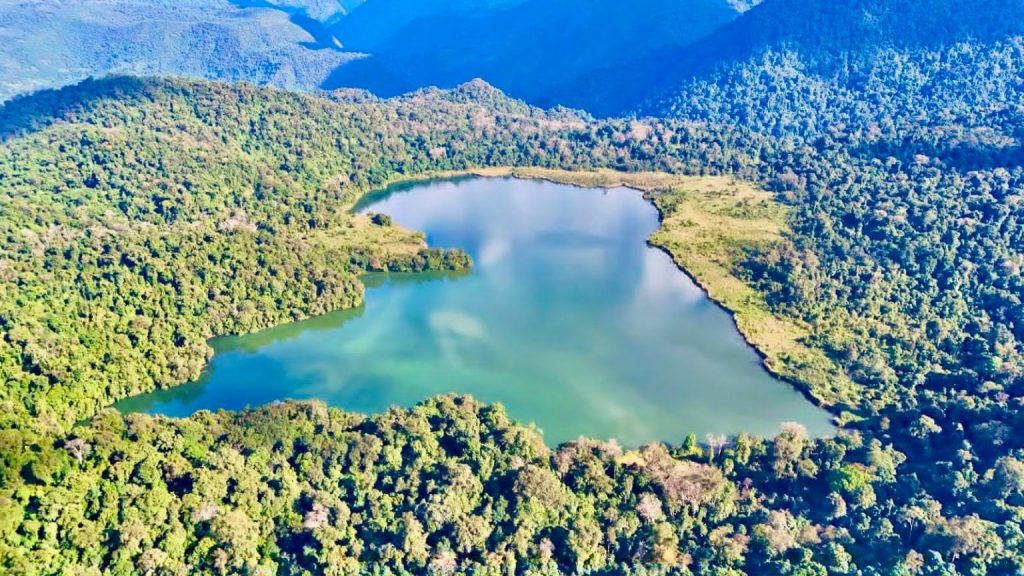
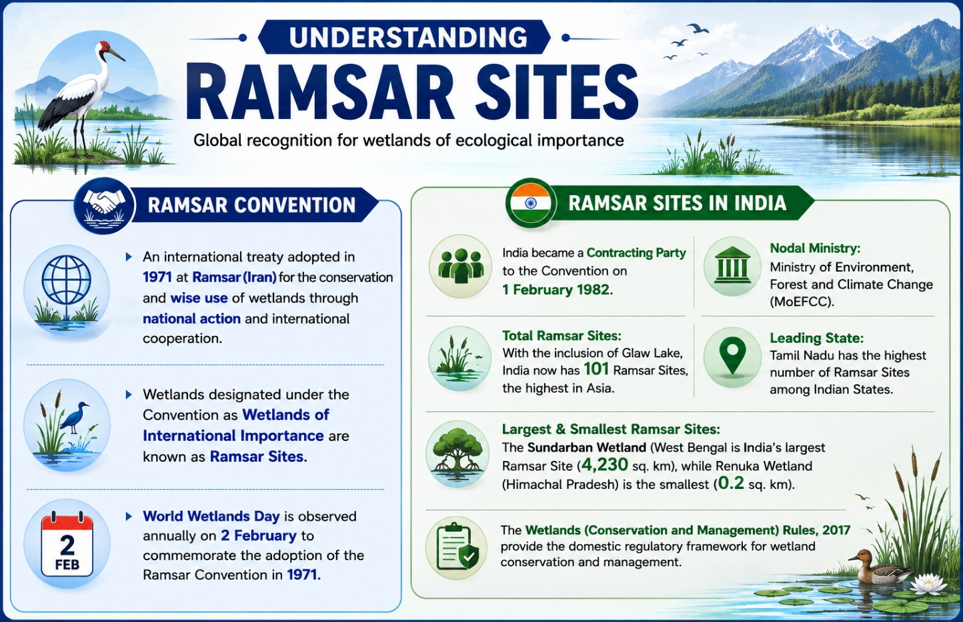
Context: Glaw Lake in Arunachal Pradesh has been designated a Wetland of International Importance (Ramsar Site) under the Ramsar Convention, becoming the State’s first Ramsar Site and taking India’s Ramsar Sites tally to 101.
About Glaw Lake
- Glaw Lake is a pristine high-altitude freshwater lake located within the Kamlang Tiger Reserve and Wildlife Sanctuary in Lohit district of Arunachal Pradesh.
- Situated in the Eastern Himalayan landscape, it is recognised as a biodiversity hotspot and performs important hydrological and ecological functions.
- The lake is sacred to the Miju Mishmi (Kman) and Digaru Mishmi (Taraon) communities, whose traditional stewardship and community-led conservation practices have helped preserve its ecological integrity.
- The Ramsar designation accords international recognition to Glaw Lake’s ecological significance and recognises decades of successful community-led conservation.
Significance of the Designation
- First Ramsar Site of Arunachal Pradesh: Strengthens conservation of ecologically important wetlands in the Eastern Himalayan region.
- Recognition of Indigenous Stewardship: Acknowledges the traditional conservation practices of the Idu Mishmi community, highlighting the role of indigenous knowledge in biodiversity conservation.
- Boosts Scientific Conservation: Enhances opportunities for ecological monitoring, research, sustainable management and low-impact eco-tourism.
- Strengthens India’s Wetland Network: Expands India’s Ramsar network to 101 sites, reinforcing the country’s commitment to wetland conservation and sustainable development.
Challenges in Conservation
- Fragile Himalayan Ecosystem: High-altitude wetlands are highly vulnerable to climate change, altered hydrological regimes and ecological degradation.
- Developmental Pressures: Infrastructure development, unregulated tourism and other anthropogenic activities may threaten the lake’s ecological character.
- Need for Scientific Monitoring: Limited long-term ecological data and monitoring may constrain evidence-based conservation and adaptive management.
- Balancing Conservation & Livelihoods: Ensuring effective wetland protection while safeguarding the traditional rights and livelihoods of indigenous communities remains a key challenge.
Way Forward
- Strengthen Community-based Conservation: Build upon the traditional stewardship of the Idu Mishmi community through participatory wetland management.
- Enhance Scientific Monitoring: Establish long-term ecological monitoring and research programmes to assess biodiversity, ecosystem health and climate impacts.
- Promote Low-impact Eco-tourism: Encourage responsible nature-based tourism that supports local livelihoods without compromising the lake’s ecological integrity.
- Implement Integrated Wetland Management: Ensure effective implementation of the Wetlands (Conservation and Management) Rules, 2017 through coordinated action by government agencies, scientific institutions and local communities.