
SYLLABUS
GS-2: Welfare schemes for vulnerable sections of the population by the Centre and States. Issues relating to development and management of Social Sector/Services relating to Health.
Context: The Ministry of Health and Family Welfare is celebrating “10 Years of PMSMA – A Decade of Care” on 9 June 2026, marking a decade of the successful implementation of the Pradhan Mantri Surakshit Matritva Abhiyaan (PMSMA).
About Pradhan Mantri Surakshit Matritva Abhiyaan (PMSMA)
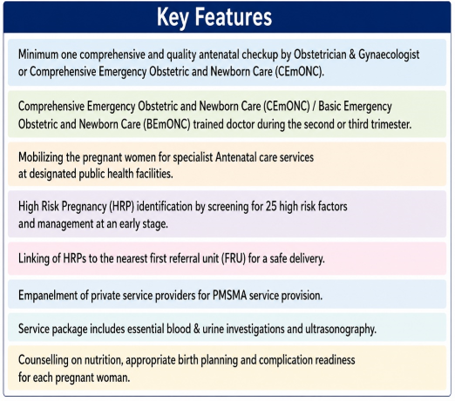
- PMSMA was launched by the Ministry of Health and Family Welfare (MoHFW) on 9 June 2016.
- It provides free, comprehensive and quality Antenatal Care (ANC) services to pregnant women on the 9th day of every month at designated government health facilities.
- The scheme primarily targets women in the second and third trimesters of pregnancy.
- Objectives:
- Ensure at least one specialist antenatal check-up for every pregnant woman in the second or third trimester.
- Improve the quality and coverage of ANC services, including diagnostics and counselling.
- Identify and manage High-Risk Pregnancies (HRPs) at an early stage.
- Promote appropriate birth planning and complication readiness.
- Provide additional opportunities for women who have missed routine ANC visits.
- High-Risk Pregnancy (HRP) Management:
- One of the most important components of PMSMA is the identification and follow-up of 25 high-risk pregnancy categories, including severe anaemia, hypertension, gestational diabetes, HIV, hypothyroidism and multiple pregnancies.
- Colour-coded stickers are used on MCP cards: Green Sticker (Normal pregnancy) and Red Sticker (High-Risk Pregnancy).
- High-risk cases are linked to First Referral Units (FRUs) for specialist care and safe delivery.
- e-PMSMA (Extended PMSMA): Launched in January 2022 to strengthen monitoring and follow-up of HRPs. Features include:
- Name-based line listing of HRPs.
- Individual tracking up to 45 days after delivery.
- Additional PMSMA sessions (up to four per month).
- SMS alerts to beneficiaries and ASHA workers.
- Incentives for ASHAs and beneficiaries to ensure follow-up visits.
Key Achievements
- Expanded Maternal Healthcare Coverage: PMSMA has provided free and quality antenatal care services to more than 7.5 crore pregnant women since its launch in 2016.
- Strengthened High-Risk Pregnancy Management: The programme has established a nationwide system for early identification, referral and continuous monitoring of High-Risk Pregnancies (HRPs).
- Improved Maternal Health Outcomes: India’s Maternal Mortality Ratio (MMR) declined from 130 per lakh live births (2014–16) to 87 per lakh live births (2022–24) during the period of PMSMA’s implementation.
- Digital Transformation of Maternal Care: The launch of e-PMSMA in 2022 strengthened digital tracking and follow-up of high-risk pregnancies until safe maternal and neonatal outcomes are achieved.
Significance
- Advancing Safe Motherhood: PMSMA ensures timely antenatal screening, diagnosis and treatment, thereby promoting safer pregnancies and childbirth.
- Reducing Maternal and Neonatal Mortality: Early detection and management of pregnancy-related complications help reduce preventable maternal and newborn deaths.
- Promoting Equitable Healthcare Access: The scheme provides free specialist antenatal care services to pregnant women, particularly those in underserved and remote areas.
- Supporting National and Global Health Goals: PMSMA contributes to achieving India’s maternal health targets under the National Health Policy, 2017 and the SDGs.
- Strengthening the Maternal Healthcare Ecosystem: The programme complements other maternal health initiatives and reinforces the continuum of care for mothers and newborns.