
SYLLABUS
GS- 1: Indian Culture – Salient aspects of Art Forms, Literature and Architecture from ancient to modern times.
GS-4: Human Values – lessons from the lives and teachings of great leaders, reformers and administrators
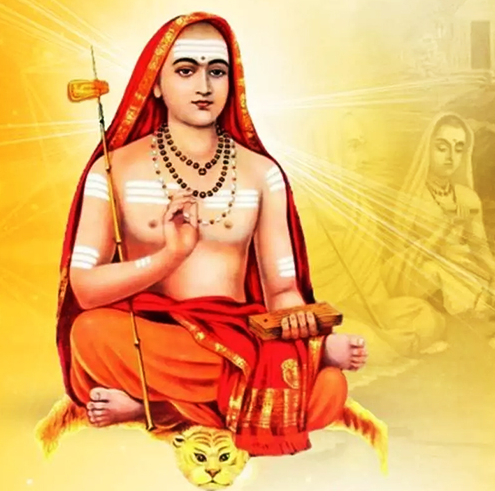
Context: On 21 April 2026, the Prime Minister of India, paid homage to Adi Shankaracharya on the occasion of his Jayanti, recognising him as one of India’s greatest spiritual luminaries.
• This is 1238th birth anniversary of Adi Shankaracharya.
About Adi Shankaracharya (approx. 788–820 CE):
• Adi Shankaracharya was born in Kalady, a village in the present Ernakulam district of Kerala state in India on the Vaisakha Shukla Panchami day of the Hindu calendar.
• His father was Shivaguru and mother Aryamba.
• At the age of 8 years, he took sanyasa under the guidance of Govinda Bhagavatpada.
• He mastered and wrote commentaries on the Prasthanatrayi Shastras, establishing himself as a profound scholar early in life.
• By the age of 16, he had already achieved significant philosophical accomplishments.
Philosophical Contributions: Advaita Vedanta
• Adi Shankaracharya’s central contribution lies in systematising Advaita Vedanta, a doctrine of non-dualism:
- Reality is non-dual (Advaita) and rooted in Brahman, the ultimate truth.
- The individual self (Atman) is identical with Brahman.
- The world is often interpreted as empirical or illusory (Mithya).
• His philosophy is encapsulated in the formulation:“Brahma satyam, jagan mithya, jivo brahmaiva naaparah.”
Debates
• He defeated Buddhist scholars in philosophical debates, reasserting the foundations of Sanatana Dharma.
• He also defeated scholars like Mandana Mishra and made them his disciples.
• His deep understanding and interpretation of shastras strengthened the intellectual framework of dharma.
Revival and Propagation of Sanatana Dharma
• He preached and propagated Vedic Sanatana Dharma widely.
• He revived a society that had fallen into decline and restored spiritual awareness.
• He contributed to the renovation of temples and strengthening of religious institutions.
Four Peethas Established by Adi Shankaracharya
| Direction | Peetha (Matha) | Location | Associated Veda |
| East | Govardhana Peetha | Puri | Rig Veda |
| South | Sharada Peetha | Sringeri, Karnataka | Yajur Veda |
| West | Dwaraka Peetha | Dwaraka, Gujarat | Sama Veda |
| North | Jyotirmath | Badarinath | Atharva Veda |
• He also appointed his disciples Padmapada, Hasthamalaka, Sureshwara and Totaka as the Shankaracharyas of the four Peethas in East, south, west and north respectively.
Organisation and Social Integration
• Adi Shankaracharya also organised his disciples into ten categories—vana, parvata, aranya, tirtha, ashrama, giri, puri, bharati, sagar, and saraswati.
o These sanyasis were entrusted with the task of propagating dharmic values across regions.
o His efforts contributed significantly to the spiritual and cultural unity of Bharat, despite diversity and limited communication.
Legacy and Relevance Today
• Philosophical Legacy
- Regarded as the most important early exponent of Advaita Vedanta
- Provided a systematic metaphysical and epistemological framework
• Diverse Interpretations
- Some view him as a reviver of Vedic tradition
- Later thinkers like Sri Narayana Guru reinterpreted his ideas for social reform
• Debates on Social Thought
- His works have been used to both justify and critique social hierarchies
- Questions of authorship and interpretation continue to shape debates
• Contemporary Relevance
- Promotes social harmony and collective well-being
- Encourages ethical living and discipline
- Strengthens cultural and spiritual unity
- Inspires the establishment and preservation of spiritual institutions
• Statue of Oneness
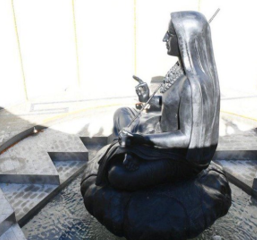
- The unveiling of the 108-foot ‘Statue of Oneness’ (Ekatmata Ki Pratima) of Adi Shankaracharya at Omkareshwar, in Khandwa district, Madhya Pradesh marks an important intersection of heritage, philosophy, and cultural tourism.
The statue depicts the philosopher as a 12-year-old child, symbolising the age at which he is believed to have visited Omkareshwar and begun his intellectual journey.