
SYLLABUS
GS-2: Issues relating to development and management of Social Sector/Services relating to Education; functioning of the Executive and the Judiciary.
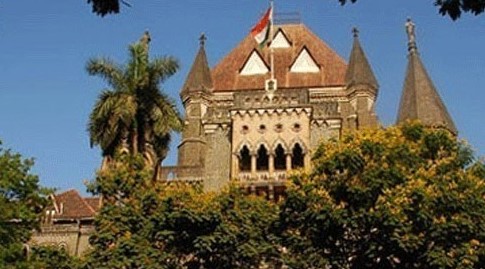
Context: The Nagpur Bench of the Bombay High Court stayed Maharashtra’s rule restricting admissions under the Right of Children to Free and Compulsory Education (RTE) Act to private schools within a 1 km radius of a child’s residence.
More on the News
- The Nagpur Bench of the Bombay High Court stayed two clauses of the Government Resolution issued by the Maharashtra government on 12 February 2026.
- The court observed that the restriction appeared to be contrary to provisions of the RTE Act and could violate constitutional guarantees under Articles 14, 21 and 21A.
- The bench directed the authorities to modify the online admission system so that applications can be submitted according to the provisions of the RTE Act and earlier court rulings.
- The RTE admission process in Maharashtra began on 17 February 2026 and the last date for submitting applications for the regular selection list was 10 March 2026.
- The interim stay is expected to delay the admission process while the authorities revise the system in compliance with the court’s order.
Understanding the Background of the Issue
- In 2024, the Bombay High Court struck down a Maharashtra government rule that exempted private schools from providing RTE admissions if a government school existed within a one-kilometre radius.
- On 12 February 2026 the Maharashtra government issued a new Government Resolution that introduced a one kilometre radius restriction for applications under the RTE quota.
- Parents could only select and apply to private unaided schools located within 1 kilometre of their registered residence. This was a sharp decrease from previous years, where parents could apply to schools within a 3-kilometre radius or beyond.
- A petition challenging the restriction was filed by a Scheduled Tribe parent from Chandrapur district who stated that no private school existed within one kilometre of his residence.
- The petitioner argued that the restriction prevented him from applying for admission for his child under the RTE quota.
- The court stayed the rule and directed authorities to ensure that admissions are conducted in accordance with the provisions of the RTE Act.
About the RTE Quota
- Section 12(1)(c) of the Right of Children to Free and Compulsory Education Act mandates that private unaided schools reserve 25% of entry level seats for children from economically weaker sections and disadvantaged groups.
- Disadvantaged Groups (DG) includes children from Scheduled Castes (SC), Scheduled Tribes (ST), Other Backward Classes (OBC-non creamy layer), etc.
- The provision seeks to promote social inclusion and equitable access to quality education.
- The quota generally applies to entry-level classes such as nursery, kindergarten or Class 1, depending on the structure of the school.
- The state government reimburses private schools for the cost incurred in educating students admitted under this quota.
About the Right of Children to Free and Compulsory Education Act 2009
- The RTE Act came into force in 2009 to implement the fundamental right to education guaranteed under Article 21A of the Constitution of India.
- The Act guarantees free and compulsory education to all children between six and fourteen years of age.
- It lays down minimum standards for school infrastructure, teacher qualifications and student learning conditions.
- The Act prohibits physical punishment, mental harassment and discrimination against students.
- The Act aims to ensure universal elementary education and reduce educational inequality across social groups in India.
- The Act initially introduced a no detention policy up to Class 8 which was later modified through RTE Amendment Act 2019, allowing states to conduct examinations.
Constitutional Provisions Related to Education
- Article 21A guarantees the fundamental right to free and compulsory education for children between six and fourteen years of age.
- Article 45 directs the state to provide early childhood care and education for children below six years of age.
- Article 51A(k) places a fundamental duty on parents and guardians to provide opportunities for education to children between six and fourteen years of age.