
SYLLABUS
GS-3: Conservation, environmental pollution and degradation, environmental impact assessment.
Context: Recently, the Ministry of New and Renewable Energy notified standards of Green Ammonia and Green Methanol for India to accelerate the trade of Green Hydrogen derivatives.
More on the News
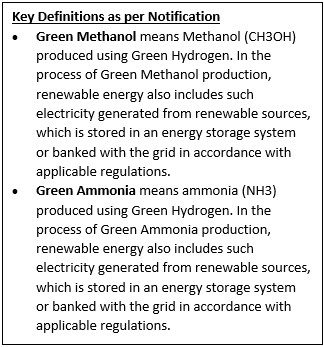
- The standards define emission thresholds and eligibility conditions for fuels to be classified as green.
- The notification aims to promote the development and trade of green hydrogen derivatives in India.
- The initiative forms part of the National Green Hydrogen Mission, which was approved by the Union Cabinet on 4 January 2023 with an outlay of ₹19,744 crore.
About National Green Hydrogen Mission
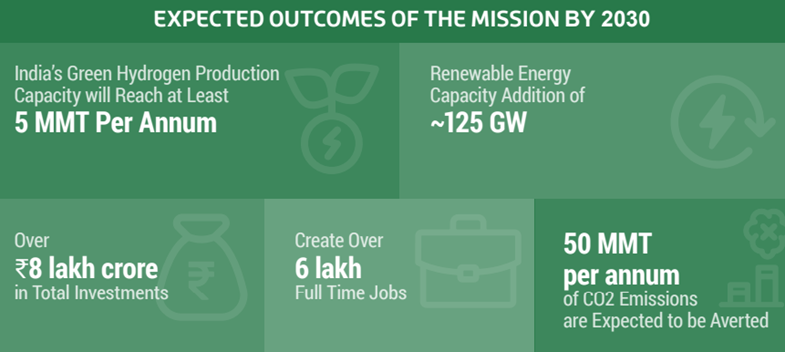
- The National Green Hydrogen Mission aims to make India a global hub for production, utilisation, and export of green hydrogen and its derivatives like Green Ammonia and Green Methanol.
- The Mission has set ambitious goals such as production of 5 Million Metric Tonnes (MMT) per annum of Green Hydrogen and to avoid nearly 50 MMT of greenhouse gas emissions every year by 2030 by 2030.
- The mission supports the use of renewable energy for hydrogen production to reduce carbon emissions.
Green Ammonia Standard for India
- The Green Ammonia Standard defines the maximum emission level allowed for ammonia to be classified as green.
- The Green Ammonia Standard for India requires that total non-biogenic greenhouse gas emissions must not exceed 0.38 kg carbon dioxide equivalent per kg of ammonia (kg CO₂ eq/kg NH₃).
- The emission calculation includes emissions from green hydrogen production, ammonia synthesis, purification, compression and on-site storage, and it is calculated as an average over the preceding 12-month period.
Green Methanol Standard for India
- The Green Methanol Standard defines the emission threshold required for methanol to be classified as green.
- The Green Methanol Standard for India requires that total non-biogenic greenhouse gas emissions must not exceed 0.44 kg carbon dioxide equivalent per kg of methanol (kg CO₂ eq/kg CH₃OH).
- The emission calculation includes emissions from green hydrogen production, methanol synthesis, purification and on-site storage, and it is calculated as an average over the preceding 12-month period.
- Sources of Carbon Dioxide for Green Methanol:
- The notification allows carbon dioxide for green methanol production to be sourced from biogenic sources, direct air capture, or existing industrial sources.
- The government may revise the list of eligible carbon dioxide sources in the future.
Significance of the Standards
- Regulatory Clarity for Industry: The standards establish clear emission thresholds and certification criteria for green ammonia and green methanol, providing certainty to investors, technology developers, and project developers in the emerging green hydrogen economy.
- Accelerating Industrial Decarbonisation: By enabling the use of green hydrogen derivatives, the standards support the decarbonisation of hard-to-abate sectors such as fertilisers, shipping, power generation, and heavy industries, which rely heavily on conventional fossil-fuel-based fuels and feedstocks.
- Boosting Global Competitiveness: The framework aligns India with evolving international standards for low-carbon fuels, strengthening its position as a credible global supplier of green hydrogen and its derivatives.
- Promoting Export Opportunities: Standardisation facilitates certification and cross-border trade, helping India expand exports of green ammonia and green methanol, especially to markets pursuing net-zero targets.