
SYLLABUS
GS-3: Awareness in the fields of IT, Space, Computers, robotics, Nano-technology, bio-technology and issues relating to intellectual property rights.
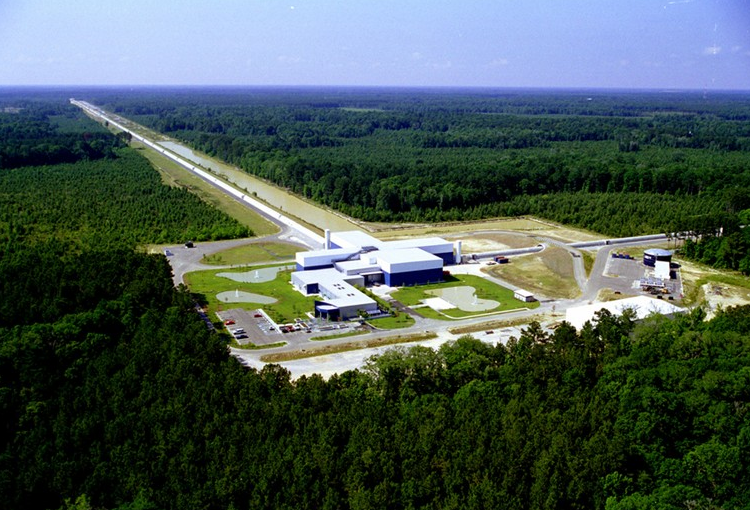
Context: Recently, Larsen & Toubro (L&T), through its Heavy Civil Infrastructure (HCI) and Heavy Engineering (HE) verticals, secured a major order from the Department of Atomic Energy (DAE) to establish the Laser Interferometer Gravitational Wave Observatory (LIGO)-India.
More on the News
- The project is classified as a significant order worth ₹1,000–2,500 crore and marks a major milestone in India’s scientific infrastructure development.
- The Observatory will be located at Aundha in Hingoli district, Maharashtra.
- The project is part of India’s flagship Mega Science initiatives and is expected to be completed within 48 months.
- It is being developed through global scientific collaboration, including:
- The Indian partners include the Raja Ramanna Centre for Advanced Technology (RRCAT) and the Institute for Plasma Research (IPR).
- The United States partner institution is the Laser Interferometer Gravitational-Wave Observatory Laboratory.
- The project will receive academic and technical support from the California Institute of Technology (Caltech) and the Massachusetts Institute of Technology (MIT).
- The project is jointly implemented by the Department of Atomic Energy (DAE) and Department of Science and Technology (DST), in collaboration with the National Science Foundation (NSF), USA.
Key Features of LIGO-India
- Construction of vibration-sensitive, high-precision civil infrastructure.
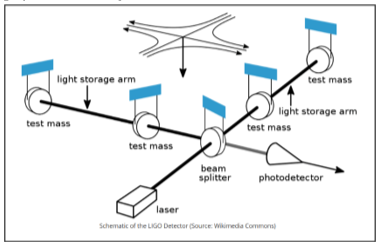
- Installation of an ultra-high vacuum 8-km beam tube system, a core component of gravitational-wave detection.
- Integration of Mechanical and electrical systems, HVAC and fire protection systems, Vacuum control and monitoring systems and associated scientific utilities.
- Once operational, LIGO–India will:
- Strengthen the global gravitational-wave detector network.
- Improve source localisation of cosmic events.
- Enhance India’s role in cutting-edge astrophysics research.
Global Network of Gravitational-Wave (GW) Detectors
LIGO–India will join the worldwide network of gravitational-wave observatories, enhancing triangulation and detection accuracy.
- Adding an Indian detector will significantly improve global sky coverage and precision in locating cosmic sources.
- The existing network, often referred to as the LIGO-Virgo-KAGRA (LVK) collaboration, currently operates or supports several key facilities:
- LIGO Hanford & LIGO Livingston (USA): Twin 4-km arm interferometers located in Washington and Louisiana, respectively.
- Virgo Interferometer (Italy): A 3-km arm detector located near Pisa, operated by the European Gravitational Observatory (EGO).
- KAGRA (Japan): A 3-km underground cryogenic detector at the Kamioka Observatory.
- GEO600 (Germany): A 600-meter detector near Hannover, primarily used for developing new interferometer technologies.
Significance for India
- Establishes India as a major player in global big science projects.
- Strengthens capabilities in Precision engineering, astrophysics and cosmology, and Ultra-high vacuum and laser technologies.
- Boosts indigenous expertise in large-scale scientific infrastructure.
- Enhances India’s scientific diplomacy through collaboration with leading global institutions.