
SYLLABUS
GS-3: Awareness in the fields of IT, Space, Computers, robotics, Nano-technology, bio-technology and issues relating to intellectual property rights.
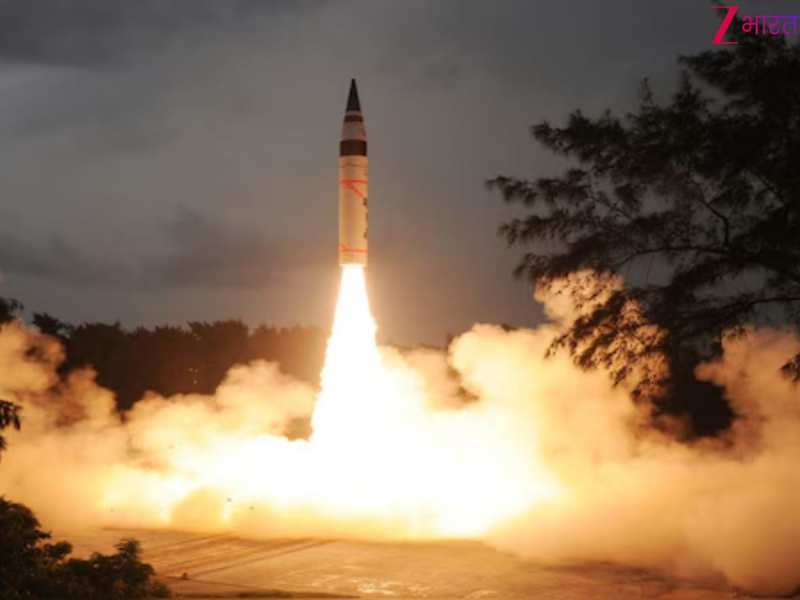
Context: Recently, India successfully test-fired the nuclear-capable Agni-III ballistic missile from the Integrated Test Range, Chandipur, off the Odisha coast.
More on the News
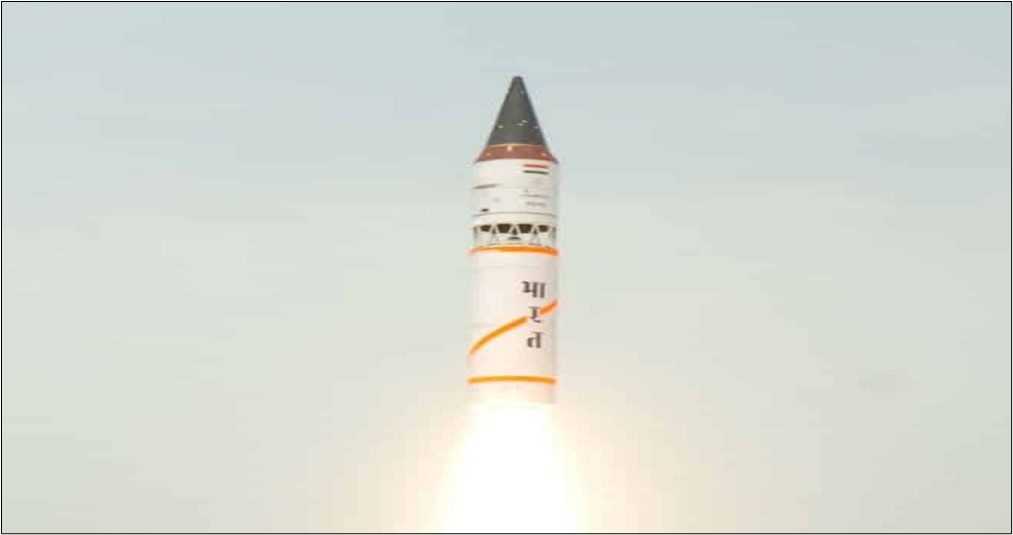
- The surface-to-surface Agni-III missile was launched by the Strategic Forces Command from a road-mobile launcher as part of routine user training exercise.
- The missile was randomly selected from the production lot, underscoringits operational readiness.
- After the auto-launch command, the two-stage solid-fuel missile followed its designated flight path and accurately struck the pre-designated target area in the Bay of Bengal.
- The test validated all operational and technical parameters, confirming the system’s reliability and accuracy.
- The missile’s trajectory was monitored in real time using radars along the eastern coast, along with telemetry and electro-optical systems.
- Down-range naval ships positioned near the impact point recorded the terminal phase of the flight.
- According to the Defence Research and Development Organisation, the missile met all mission objectives.
Key Specifications of Agni-III
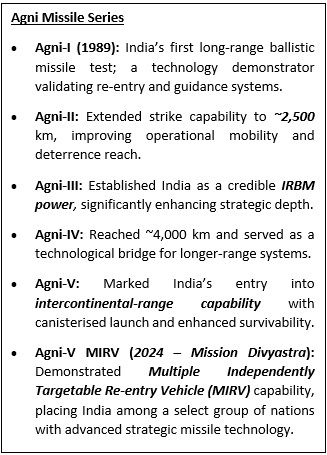
- Type: Intermediate-Range Ballistic Missile (IRBM).
- Strike Range: Approximately 3,000 to 3,500 kilometres.
- Propulsion: Two-stage solid-fuelled system.
- Payload: Up to 1.5 tonnes, capable of carrying conventional and nuclear warheads.
- Design: Shorter and wider, and capable of carrying a heavier warhead than Agni-I and Agni-II missiles.
- Accuracy and Guidance: High accuracy achieved through an advanced re-entry vehicle that uses imaging infra-red (IIR) or active seeker guidance systems.
- Deployment: Can be launched from rail or road-mobile launchers, enhancing its operational flexibility and survivability.
- Materials and Performance: Chromium coating on the missile body reportedly contributes to increased range.
- Induction: In service with the Strategic Forces Command since 2011.
Significance of the Missile
- Agni-III strengthens India’s credible minimum deterrence posture.
- The successful test enhances confidence in India’s strategic missile forces.
- The missile contributes to the operational readiness of the Strategic Forces Command.
- It reinforces India’s long-range strike capability against strategic threats.
- The Strategic Forces Command ensures effective management and operational control of India’s strategic weapons systems.