

Nayi Chetna 4.0 Campaign
Context: Recently, the Union Minister of Rural Development and Agriculture and Farmers Welfare launched Nayi Chetna 4.0 in New Delhi to advance gender equality and strengthen women’s empowerment.
More on the News
- The campaign promotes gender equality and aims to empower rural women through Self-Help Groups under DAY-NRLM.
- An inter-ministerial joint advisory was unveiled to ensure convergent action between twelve Ministries and Departments and to adopt a whole-of-government approach towards eliminating gender discrimination and violence.
• An Inter-Ministerial Tripartite MoU–Letter of Intent was unveiled between the Ministries of Women and Child Development, Law and Justice, and Rural Development for the Violence-Free Village Initiative.
- The initiative aims to create model villages where girls and women have access to safety, rights, and empowerment opportunities.
Objectives of Nayi Chetna 4.0
- The campaign aims to strengthen community efforts to address gender-based violence and support women’s dignity and safety.
- The campaign promotes safe mobility for rural women and recognises them as essential contributors to household and community economies.
- The initiative addresses unpaid care work through shared community responsibility and awareness.
- The campaign enhances access to assets, credit, markets, and skills to expand rural women’s entrepreneurial and livelihood opportunities.
- The programme advocates gender-responsive policies and budgets to ensure women’s participation in local decision-making.
BIMSTEC Meeting on Maritime Security Cooperation
Context: Recently, the National Security Council Secretariat (New Delhi) hosted the fourth meeting of BIMSTEC Expert Group on Maritime Security Cooperation, under the chairmanship of Vice Admiral Biswajit Dasgupta (Retd.), National Maritime Security Coordinator from 24-25 November 2025.
More on the News
- The event marks the successful completion of another round of result-oriented discussions on the identified deliverables under key focus areas in the field of maritime security.
- The deliberations were focused on the adoption of Guidelines on various Maritime Security related issues, including HADR aspects.
- The successful conduct of Meeting underscored the recognition of maritime domain as the common binding factor in the Bay of Bengal region and marks a significant milestone in the collective maritime security endeavours in the region.
About BIMSTEC
- The Bay of Bengal Initiative for Multi-Sectoral Technical and Economic Cooperation (BIMSTEC) is a regional organisation that was established on 06 June 1997 with the signing of the Bangkok Declaration.
- It aims to accelerate the economic growth and social progress in the Bay of Bengal region through joint endeavours in a spirit of equality and partnership.
- Initially, it is known as BIST-EC (Bangladesh-India-Sri Lanka-Thailand Economic Cooperation), the organisation now comprises seven Member States with the admission of Myanmar on 22 December 1997, and Bhutan and Nepal in February 2004.
- Members: Bangladesh, India, Myanmar, Sri Lanka, Thailand, Bhutan and Nepal.
137th birth anniversary of Ganesh Vasudev Mavalankar
Context: The Lok Sabha Speaker paid tributes to Shri Ganesh Vasudev Mavalankar, the first Speaker of Lok Sabha, on his birth anniversary on 27 November.
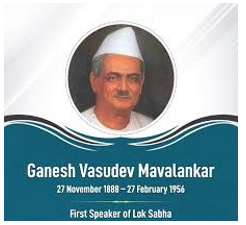
About Ganesh Vasudev Mavalankar
- G.V. Mavalankar was born on 27 November 1888, in Baroda and later pursued higher education in Ahmedabad, where he earned a degree in science followed by a first-class law degree.
- He began his career as both a lawyer and a professor of law, gaining recognition for his scholarly discipline and commitment to public life.
- From 1920 to 1922 he joined the national movement and actively joined major campaigns such as the Non-Cooperation Movement and the Khaira No-Rent movement, for which he faced multiple imprisonments.
- In 1921–1922, he served as the Secretary of the Gujarat Provincial Congress Committee.
- In 1937, he was elected as the Speaker of the Bombay Province Legislative Assembly.
- In January 1946, he was elected President of the Central Legislative Assembly.
- From 1946 to 1950, he served as the Speaker of the Constituent Assembly (Legislative) and oversaw crucial legislative debates during the drafting of the Constitution.
- Between 1950 and 1952, he became the Speaker of the Provisional Parliament after the Constitution came into effect.
- On May 15, 1952, he was unanimously elected as the first Speaker of the First Lok Sabha.
- From 1952 to 1956, he shaped parliamentary conventions, established key committees such as the Rules Committee and the Business Advisory Committee, and introduced practices like the discussion on the President’s Address and Motion of Thanks.
- During this period, he also contributed to educational development and served as the founder and president of the Ahmedabad Education Society.
- In 1956, he passed away while serving as the Speaker of the Lok Sabha.
India and Indonesia Move Closer to BrahMos Missile Agreement
Context: India and Indonesia are advancing discussions on a major defence agreement for the BrahMos missile system to deepen strategic and security cooperation in the Indo-Pacific.
More on the News
- The Defence Ministers of India and Indonesia held the third India–Indonesia Defence Ministers’ Dialogue in New Delhi.
- Both sides discussed final details on the proposed procurement of the BrahMos supersonic cruise missile by Indonesia.
- The Indonesian side showed strong interest in the naval version, which is expected to be delivered first, while also evaluating the air-launched variant for integration with their Su-30 fighter jets.
- Once the deal is finalised, Indonesia will become the second ASEAN country to acquire BrahMos, after the Philippines, which procured three batteries in 2022.
- Indonesia seeks to strengthen maritime and aerial deterrence in the South China Sea through modern missile systems.
About BrahMos Missile
- Developed jointly by India’s DRDO and Russia’s NPO Mashinostroyeniya, the BrahMos missile is the only supersonic cruise missile in the world capable of speeds up to Mach 2.8 (around 3,450 kmph). It is capable of precise strikes against land, sea, and coastal targets.
- The missile has been operationalised across all three Indian defence services and was used during Operation Sindoor for striking designated targets.
- BrahMos Aerospace is working to export the next-generation version to several countries in Africa and West Asia.
Tetrapod-Shaped Nanoparticles
Context: Recently, researchers from IIT Bombay, IIT Madras and IIT Kanpur reported that tetrapod-shaped nanoparticles reduce the viscosity of polymers and could enable easier and less energy-intensive plastic processing.
More on the News
- A collaborative study by IIT Bombay, IIT Madras and IIT Kanpur showed that adding tetrapod-shaped nanoparticles to polymers such as polystyrene lowers viscosity and improves flow.
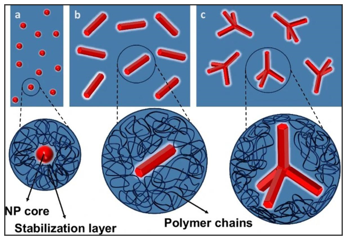
- The study demonstrated that, unlike spherical or rod-shaped nanoparticles, which usually increase viscosity tetrapods make thick polymer chains move more freely.
- The research was led by Professor Mithun Chowdhury of IIT Bombay with contributions from multiple researchers across the three institutions.
Key Highlights of the Study
- The study finds that tetrapod-shaped nanoparticles lower polymer viscosity and make molten plastics easier to melt, mix and shape during industrial processing.
- The team explains that long polymer chains avoid the inner curves of a tetrapod, which reduces chain crowding and allows smoother sliding of polymer molecules.
- The researchers confirm through control experiments that spherical and rod-shaped nanoparticles increase viscosity and only tetrapods ease polymer flow.
- The study uses simulations to show how nanoparticle geometry affects polymer behaviour and flow patterns at the microscopic level.
- The work indicates that nanoparticle shape can be used to tune viscosity for coatings, adhesives or 3D printing materials that need precise flow control.
- The researchers note that the mechanical and thermal properties of polystyrene remain unchanged after adding tetrapods, which shows that the polymer’s stability is not compromised.
25th Summer Deaflympics 2025
Context: Recently, the Prime Minister of India congratulated the Indian Deaflympians for their extraordinary performance at the 25th Summer Deaflympics 2025 held in Tokyo, Japan.
More on the News
- India secured 6th position overall with a historic tally of 20 medals, which included 9 gold medals, 7 silver medals and 4 bronze medals. It was topped by Ukraine, followed by the United States and Japan.
- A total of 73 Indian athletes – 45 men and 28 women – competed for medals across 11 sports at the Deaflympics 2025, held from November 15 to 26.
- The Tokyo 2025 edition was the 25th Summer Deaflympics, 101 years after the inaugural edition held in Paris in 1924.
About Deaflympics 2025
- The Deaflympics is an international multi-sport event for deaf athletes that is held every four years under the International Committee of Sports for the Deaf.
- The Games featured 21 sports and used visual communication systems such as starting lights, flags and International Sign for all competitions.
- It was topped by Ukraine, followed by the United States and Japan.
- The participation rules require athletes to have a minimum hearing loss of fifty-five decibels in the better ear without any hearing aid.
- India made its Deaflympics debut in 1965 and entered the 2025 edition with fifty-two medals in its historical tally.
Chanakya Defence Dialogue-2025
Context: Recently, the President of India inaugurated the third edition of ‘Chanakya Defence Dialogue-2025’ in New Delhi.
More on the News
- Chanakya Defence Dialogue (CDD) conducted by the Indian Army in collaboration with the Centre for Land Warfare Studies.
- CDD-2025 is being organised under the theme “Reform to Transform: Sashakt, Surakshit aur Viksit Bharat”.
- The dialogue emphasises India’s growing defence preparedness, evolving military reforms, and the nation’s commitment to peace backed by strength.
- The President of India praised the Indian Armed Forces for their professionalism, patriotism, and adaptability across conventional warfare, counter-insurgency operations, and humanitarian missions.
- Highlighting Operation Sindoor, the President said it showcased India’s counter-terror capability and moral clarity in acting firmly yet responsibly for peace.
- She also underlined the armed forces’ wider contribution to national development, including infrastructure, connectivity, tourism, and education in border regions.
- The first edition of the Chanakya Defence Dialogue was held in 2023, at the Manekshaw Centre in New Delhi, India.