
SYLLABUS
GS-2: Issues relating to development and management of Social Sector/Services relating to Health, Education, Human Resources.
Context: World Tuberculosis Day is observed every year on 24 March to raise awareness and strengthen global efforts to eliminate tuberculosis.
About World TB Day
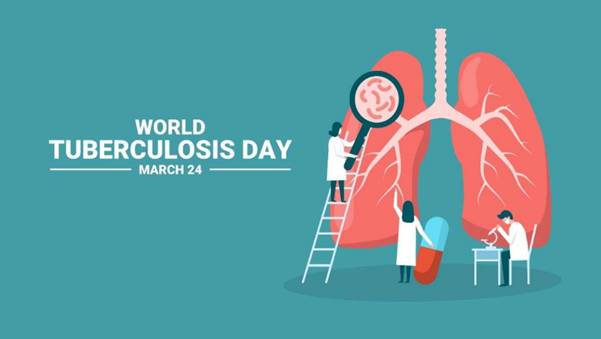
- World Tuberculosis Day marks the discovery of Mycobacterium tuberculosis by Dr. Robert Koch in 1882, a breakthrough that made diagnosis and treatment of TB possible.
- The theme for 2026, “Yes! We can end TB”, reflects both urgency and optimism, emphasizing that ending the TB epidemic is achievable through stronger political commitment, innovation, and collective action.
- The day also honours millions of lives lost to TB, recognises the efforts of health workers and stakeholders, and reinforces global solidarity in combating the disease.
Significance of World TB Day
- Tuberculosis remains one of the deadliest infectious diseases globally, despite being preventable and curable.
- Around 10.7 million people fell ill, and 1.23 million died due to TB in 2024
- Nearly 3,500 deaths occur daily, highlighting its persistent burden
- About 83 million lives have been saved since 2000, reflecting progress
- The observance aims to:
- Promote early diagnosis and treatment to reduce transmission.
- Raise awareness about symptoms, prevention, and stigma.
- Highlight challenges such as drug-resistant TB (MDR/XDR-TB).
- Address links with poverty, undernutrition, and inequality.
- Encourage global collaboration and investment.
About the Tuberculosis (TB)
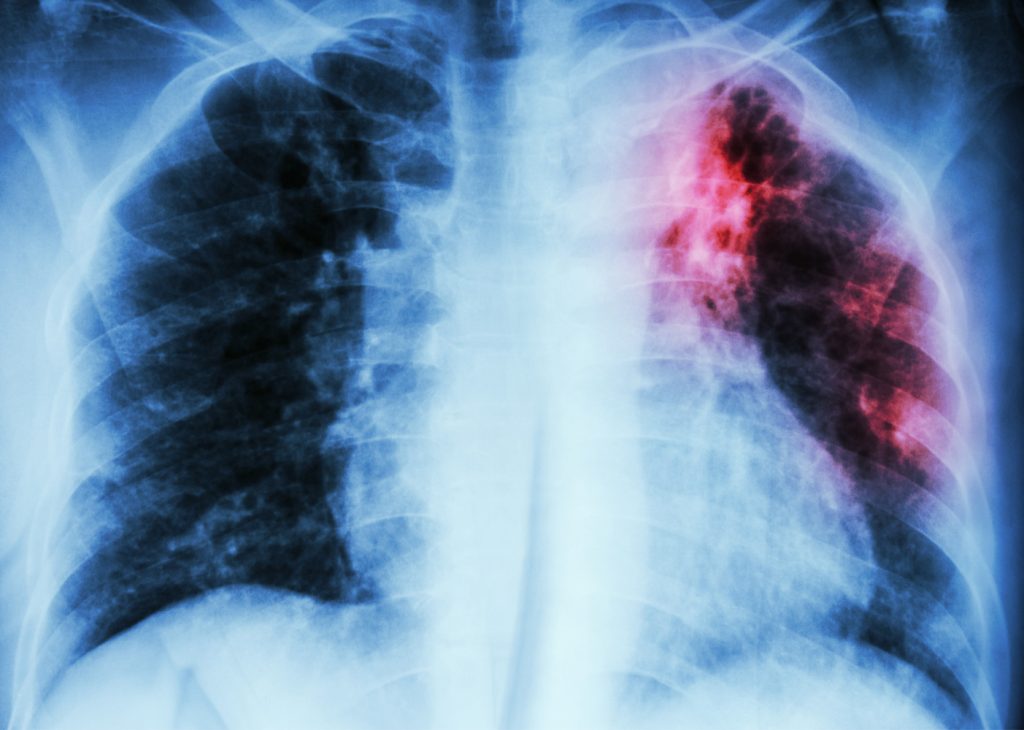
- Tuberculosis (TB) is a bacterial infectious disease caused by Mycobacterium tuberculosis, primarily affecting the lungs (pulmonary TB), but it can also involve other organs such as the brain, kidneys, and spine.
- TB spreads through the air when an infected person coughs, sneezes, or speaks
- It exists in two forms: Latent TB (no symptoms, not contagious) and Active TB (symptomatic and infectious).
- Types of TB:
- Pulmonary TB: Affects the lungs; most common and contagious form
- Extrapulmonary TB: Affects other organs such as lymph nodes, brain, kidneys, or spine.
- Miliary TB: A severe form where TB spreads throughout the body via the bloodstream.
- Drug-resistant TB:
- MDR-TB (Multidrug-Resistant TB): Resistant to first-line drugs like rifampicin and isoniazid.
- XDR-TB (Extensively Drug-Resistant TB): Resistant to more advanced drugs, making treatment difficult.
- Symptoms: Common symptoms of tuberculosis include persistent cough (sometimes with blood), fever with night sweats, weight loss and fatigue, and chest pain.
- Risk Factors: Include weakened immunity (e.g., HIV), undernutrition and diabetes, tobacco and alcohol use, and overcrowded living conditions.
- Prevention and diagnosis: Include BCG vaccination to protect children from severe forms, early detection through rapid molecular tests, skin tests (TST) and IGRA, and essential screening of high-risk populations.
- Treatment: Tuberculosis is curable with antibiotics taken for 4–6 months (or longer), commonly including rifampicin, isoniazid, pyrazinamide, and ethambutol, with strict adherence essential to prevent drug resistance.
Key Initiatives to Eliminate TB
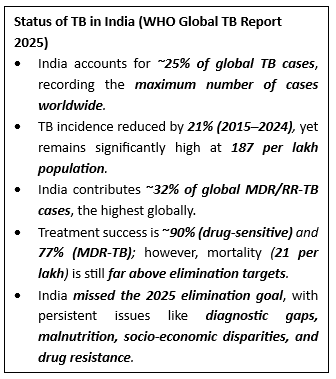
- National Tuberculosis Elimination Programme (NTEP): In 2020, the Government of India renamed the Revised National Tuberculosis Control Program (RNTCP) the National TB Elimination Program (NTEP) to eliminate tuberculosis (TB) by 2025, five years before the global target of 2030 using the Detect–Treat–Prevent–Build strategy.
- Pradhan Mantri TB Mukt Bharat Abhiyaan (PMTBMBA): A community-driven initiative providing nutritional, diagnostic, and social support to TB patients through public participation and CSR.
- Ni-kshay Poshan Yojana (NPY, 2018): A Direct Benefit Transfer scheme providing ₹1000 per month to TB patients for nutritional support during treatment.
- Ni-kshay Mitra Initiative: A programme encouraging individuals, NGOs, and corporates to adopt TB patients and provide support for at least six months.
- Ni-kshay Portal: A web-based patient management and surveillance system for real-time TB case registration, tracking, and monitoring.