
SYLLABUS
GS-2: Effect of policies and politics of developed and developing countries on India’s interests, Indian diaspora
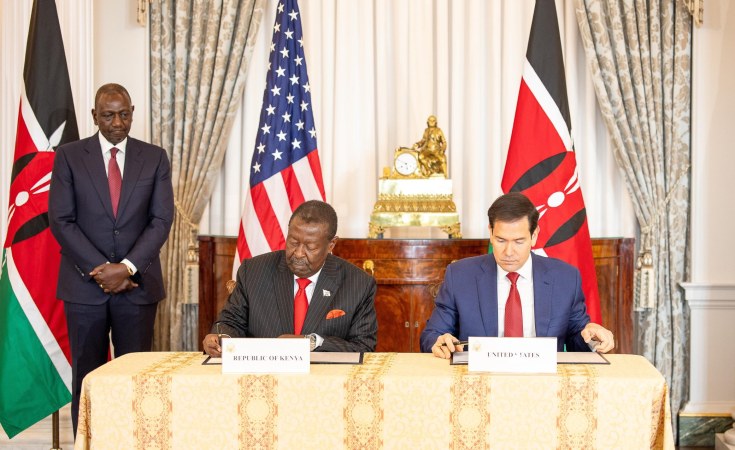
Context: Recently, United States and Kenya signed a landmark five-year, $2.5 billion health cooperation framework to replace a patchwork of previous health agreements that had traditionally been run by the U.S.
More on the News
- It is the first in a series of “America First” global health agreements under President Donald Trump’s administration.
- It replaces fragmented USAID programs dismantled earlier in 2025, prioritizing infectious disease control in US-aligned nations.
- A number of other African countries are expected to sign similar agreements with the U.S. by the end of 2025.
Key Features of the Agreement
- Under the health deal with Kenya, the U.S. will contribute $1.7 billion of the total amount, with the Kenyan government covering the remaining $850 million.
- The agreement focuses on preventing and treating diseases such as HIV/AIDS, malaria and tuberculosis with an emphasis on faith-based medical providers, although all clinics and hospitals enrolled in Kenya’s health insurance system will be eligible to receive funding.
- Family planning programmes that comply with U.S. restrictions on the provision of abortion services will also be eligible.
- It emphasizes efficiency by eliminating perceived waste and ideology from prior aid models, strengthening US leadership in global health.
United States Agency for International Development (USAID)
- USAID was the U.S. government’s primary body for foreign aid, focused on humanitarian relief and development. It was established in 1961 to counter Soviet influence.
- USAID has largely ceased its independent operations, with its functions being transferred to the U.S. Department of State to be administered under the Secretary of State, aligning aid with current administration policies.