
SYLLABUS
GS 2: Bilateral, regional and global groupings and agreements involving India and/or affecting India’s interests; Important International institutions, agencies and fora- their structure, mandate.
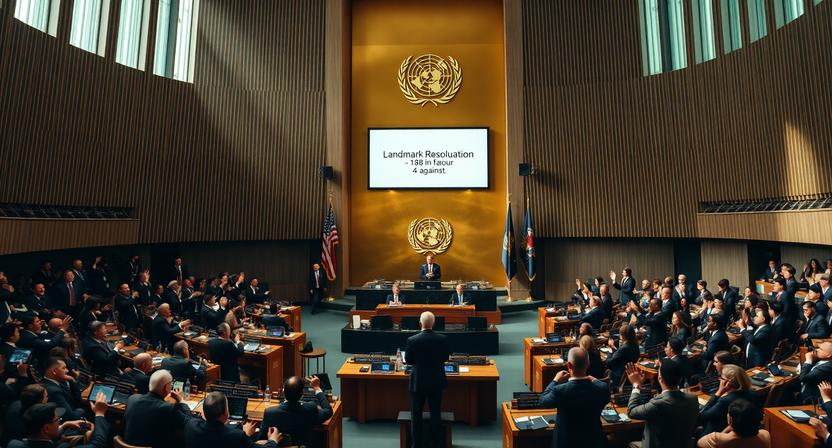
Context: Recently, the United Nations General Assembly adopted a landmark resolution to strengthen how UN mandates are created, implemented and reviewed across the system.
More on the News
• The resolution introduces, for the first time, a more structured approach across the full mandate lifecycle – from design to implementation and review.
- Mandates are the decisions taken by Member States that guide the whole UN system.
• The resolution is intended to make it easier for Member States to navigate an increasingly complex mandate landscape, while helping the United Nations reduce duplication, fragmentation and inefficiency.
• The move marks a major milestone under the UN80 Initiative, reflecting a shared understanding of the full mandate lifecycle and a shared commitment to strengthening each step of it.
About UN80 Initiative
• Launched in March 2025 by the resolution 79/318 on the UN’s 80th anniversary, the UN80 initiative is the United Nations’ ambitious, system-wide reform effort.
• It aims to make the United Nations more responsive and resilient, better equipped to serve the people whose lives depend on it, more accountable to taxpayers who underwrite its work, and more supportive of staff in their critical roles.
• It proposes changes impacting the whole UN system — from how mandates are created, to how they are delivered and reviewed.
Working of the UN80 Initiative
• Efficiency in the UN Secretariat: Focuses on optimising Secretariat functioning through consolidation of administrative platforms, relocation to lower-cost duty stations, and operational efficiencies across all pillars.
• Mandate Implementation Review: Addresses gaps in mandate design, delivery, and review, including duplication, poor coordination, weak accountability, and funding misalignment, by promoting streamlined, outcome-oriented processes.
• Structural and Programmatic Realignments: Aims to reduce fragmentation and improve coordination through reforms such as streamlined peace operations, a new humanitarian framework, restructuring development agencies, and better alignment of human rights efforts.
India’s Role in United Nations Reforms
• Founding Member & Early Leadership: A founding UN member since 1945, India championed global efforts against colonialism, disarmament, and racial discrimination, leading the struggle against apartheid even before its independence.
• Contribution to Human Rights Framework: From 1947 to 1948, it promoted gender equality in the Universal Declaration on Human Rights by changing “all men are created equal” to “all men and women are created equal”.
• Leadership in the UN General Assembly: In 1953, Vijaya Laxmi Pandit became the first female UN General Assembly President, and at the time, India advocated for global disarmament and a more equitable international economic order.
• Role in Decolonisation Efforts:
- India strongly advocated for global decolonisation and national sovereignty.
- It co-sponsored the 1960 United Nations Declaration and served as the first Chairman of the Decolonisation Committee established to end colonial rule.
• Stand Against Apartheid: India was a pioneering critic of South African apartheid, being the first to raise the issue at the UN, leading the creation of the Sub-Committee against Apartheid, and becoming an early signatory to the 1965 Convention on Racial Discrimination.
• Leadership in Global South Forums: Being the founding member of the Non-Aligned Movement and the Group of 77 (G77), India cemented its position within the UN system as a leading advocate of the concerns and aspirations of developing countries and the creation of a more equitable international economic and political order.
• Advocacy for UNSC Reforms:
- India advocates for restructuring the UNSC to reflect contemporary global realities, arguing that its current post-WWII architecture is outdated.
- Despite UN membership growing to 193, the Council has not expanded since 1963, notably leaving Africa without permanent representation despite being the focus of 75% of the UNSC’s work.
• Claim for Permanent UNSC Membership: India has strongly advocated for permanent membership in the UN Security Council, citing its major contributions to UN activities, especially in peacekeeping missions, with over 160,000 troops in 43 missions and being the third-largest contributor in 2014.
• Promotion of Global Cultural Initiatives: June 21 was declared the International Day of Yoga by the United Nations General Assembly on December 11, 2014.
• Peacekeeping Leadership: Since the 1950s, India has sent over 290,000 peacekeepers to more than 50 missions worldwide, making it the largest contributor to UN peacekeeping efforts.