
SYLLABUS
GS-2: Structure, organization and functioning of the Executive and the Judiciary Ministries and Departments of the Government.
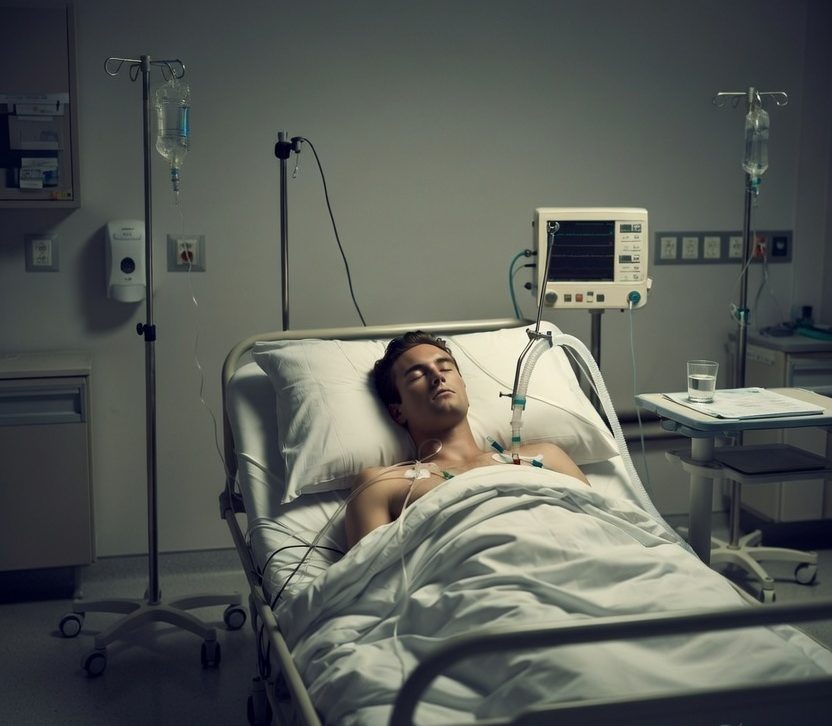
Context: In its first-ever order allowing passive euthanasia, the Supreme Court of India permitted the withdrawal of artificial life support of a 32-year-old man who has been in a comatose condition for more than 12 years.
More on the News
• The court allowed the withdrawal of Clinically Assisted Nutrition and Hydration (CANH), upholding the patient’s right to die with dignity under Article 21 of the Constitution.
• The case marks the first practical implementation of the Supreme Court’s 2018 guidelines on passive euthanasia.
Key Highlights of the Judgment
• Withdrawal of Life Support Allowed: The Court permitted the withdrawal of Clinically Assisted Nutrition and Hydration (CANH), concluding that continued treatment was no longer in the patient’s best interests.
• Recognition of CANH as Medical Treatment: The Court clarified that CANH—administered through medical procedures such as a PEG tube—is a technologically mediated medical intervention supervised by healthcare professionals and therefore qualifies as medical treatment, even when provided at home.
• Conditions for Withdrawal of Treatment: The Court held that withdrawal or withholding of medical treatment must satisfy two criteria:
- The intervention must qualify as medical treatment.
- Its withdrawal must be in the patient’s best interests, particularly when treatment becomes non-beneficial or futile.
• Integration with Palliative and End-of-Life Care: The Court directed that withdrawal of life support should occur under a structured palliative and end-of-life (EOL) care plan to ensure the patient experiences no pain, suffering, or indignity.
• Role of Medical Boards: The decision followed extensive consultations with the patient’s family and multiple medical boards, which unanimously agreed that continued treatment would not improve his condition.
• Call for Legislation: The Court urged the Central Government to enact a comprehensive law on end-of-life care and life-support withdrawal, noting that absence of legislation could allow non-medical factors such as financial distress or lack of insurance to influence decisions.
• Judicial Observations: The Bench emphasised that withdrawing life-sustaining treatment does not amount to abandoning the patient; rather, it allows the natural course of death while ensuring humane care.
About Euthanasia
• Euthanasia refers to the practice of ending a patient’s life to relieve suffering caused by an incurable or terminal medical condition.
• It is generally discussed in medical ethics and law in terms of two main forms—active euthanasia and passive euthanasia.
• Active Euthanasia: Active euthanasia involves a direct medical intervention intended to cause death, such as administering a lethal injection or medication.
- In this case, death occurs because of a deliberate act carried out to end the patient’s life. Due to its intentional nature, active euthanasia is widely considered illegal in many jurisdictions.
• Passive Euthanasia: Passive euthanasia involves withholding or withdrawing life-sustaining medical treatment, allowing the patient to die naturally when recovery is medically impossible or treatment is considered futile.
- Examples include stopping artificial ventilation, removing feeding tubes, or discontinuing other life-support systems.
• Clarification by the Supreme Court: The Supreme Court has observed that the expression “passive euthanasia” can be misleading, as it may suggest a deliberate act to end life.
- The Court has therefore suggested that the practice be more accurately described as “withdrawal or withholding of medical treatment.”
• Persistent Vegetative State (PVS): A Persistent Vegetative State (PVS) is a medical condition in which a patient shows wakefulness but lacks awareness of themselves or their surroundings.
- Patients may display sleep–wake cycles and basic reflexes, but do not exhibit meaningful responses to stimuli or the environment.
- When this condition continues for a prolonged period, it may be classified as a permanent vegetative state.
India’s Legal Status on Euthanasia
• Constitutional Basis: The right to life under Article 21 has been interpreted to include the right to die with dignity in appropriate circumstances.
• Key Judicial Developments:
- Gian Kaur Case (1996): The Supreme Court acknowledged that withdrawal of life support may accelerate the process of dying, opening the door for legal discussion on passive euthanasia.
- Aruna Shanbaug Case (2011): The Court laid down procedural guidelines for passive euthanasia in exceptional circumstances.
- Common Cause Judgment (2018): A Constitution Bench recognised the legality of passive euthanasia and introduced Advance Medical Directives (Living Wills), allowing individuals to specify in advance whether life support should be withdrawn in terminal conditions.
- Modification of Guidelines (2023): The Court simplified the procedure for withdrawal of treatment, including timelines for medical board decisions and reducing procedural hurdles.
• Government Guidelines: In 2024, the Union Health Ministry issued draft guidelines outlining conditions under which life-support withdrawal may be considered, including:
- Brain-stem death under the Transplantation of Human Organs and Tissues Act, 1994.
- Advanced and irreversible illness is unlikely to benefit from aggressive treatment.
- Informed refusal by the patient or surrogate decision-maker.
- Compliance with Supreme Court procedures.
• Current Position: Passive euthanasia (withdrawal or withholding of treatment) is permitted under strict guidelines.
- Active euthanasia remains illegal in India.
SOURCES:
The Hindu
The Hindu
The Hindu
Indian Express
News on Air