
SYLLABUS
GS-2: Government policies and interventions for development in various sectors and issues arising out of their design and implementation.
GS-3: Science and Technology- developments and their applications and effects in everyday life.
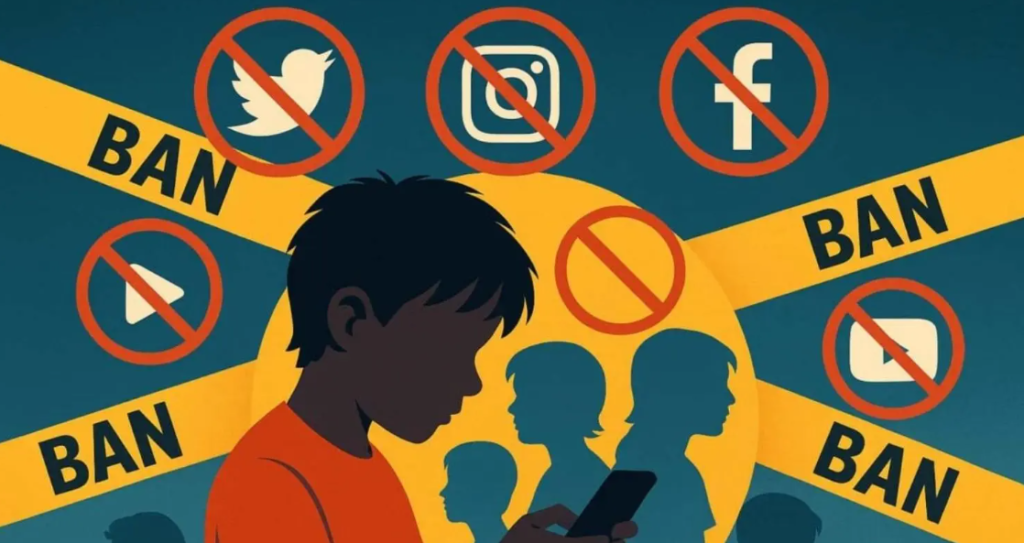
Context: Two Indian states, Karnataka and Andhra Pradesh, have announced plans to restrict or ban social media access for children (below 16 years), reflecting growing concerns about digital addiction and online harms among young users.
More on the News
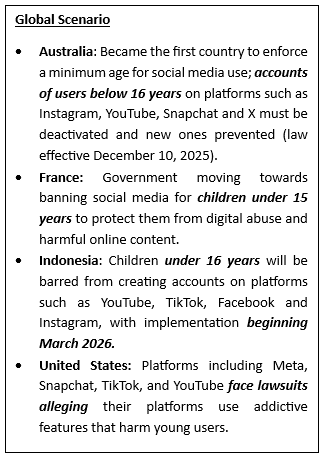
- In the Karnataka Budget 2026–27, Chief Minister Siddaramaiah announced that children under 16 will be barred from using social media to mitigate the adverse effects of increased mobile phone use.
- Children may still possess mobile phones, but will not be allowed to access social media platforms.
- Andhra Pradesh has proposed a ban on social media for children below 13 years, expected to be implemented within 90 days, while the state is also considering restrictions for the 13–16 age group.
- A Group of Ministers (GoM) is examining the proposal and consulting technology companies such as Meta, X, Google, and ShareChat.
- Karnataka has also launched the “Mobile Bidi, Pustaka Hidi” (Leave the phone, pick a book) campaign to reduce mobile addiction among students and encourage reading habits.
- These initiatives come amid rising concerns about excessive screen time, mobile addiction, declining academic performance, and mental health issuesamong school-going children.
Need for Social Media Restrictions
- Rising Digital Addiction: Increasing smartphone penetration has led to excessive screen time and dependency among children and adolescents.
- Mental Health Concerns: Research indicates associations between heavy social media use and anxiety, depression, self-harm tendencies, and body image issues, particularly among teenagers.
- Exposure to Harmful Content: Children are vulnerable to violent, sexual, gambling-related, and misinformation content circulating online.
- Cyberbullying and Online Abuse: Social media platforms can expose minors to harassment, bullying, fraud, and exploitation.
- Academic and Developmental Impact: Excessive social media use can affect attention span, academic performance, and cognitive development.
- Algorithmic Amplification of Harmful Content: Platform algorithms designed to maximise engagement may increase exposure to harmful or addictive content.
- Global Precedent and Policy Momentum: Increasing regulatory initiatives worldwide have strengthened calls for protecting children’s online safety.
Challenges and Concerns
- Constitutional and Regulatory Issues: Regulation of digital intermediaries largely falls under central legislation such as the Information Technology Act, 2000, and IT Rules, raising questions about the legality of state-level bans.
- Freedom of Speech and Expression: Restrictions on children’s access to social media may raise concerns under Article 19(1)(a) of the Constitution, which guarantees freedom of speech and expression and access to information.
- Digital Gender Divide: With only 33.3% of women in India using the internet compared to 57.1% of men, strict restrictions could further widen the existing gender digital divide.
- Implementation Difficulties: Enforcing restrictions may be difficult due to VPN usage, age misrepresentation, challenges in verifying users’ age, and technical limitationsin implementing geo-specific restrictions
- Inconsistent Regulations Across States: Different age limits proposed by states (13 in Andhra Pradesh, 16 in Karnataka) could create regulatory fragmentation.
- Risk of Driving Users to Unsafe Platforms: Strict bans could push teenagers towards unregulated or anonymous platforms, where safeguards are weaker.
- Ignoring Root Causes: Experts note that bans do not address deeper issues such as addictive platform design, weak data protection frameworks, and poor digital literacy among users.
Government Policy / Regulatory Approach
- The Union Government is not in favour of a blanket ban on social media for children. Instead, it is considering a graded regulatory framework for minors below 18 years.
- Under the proposal, children may be divided into three age groups (8–12 years, 12–16 years, and 16–18 years).
- Different levels of restrictions may apply to each group, reflecting differences in digital maturity and risk exposure.
- The proposed framework may include:
- Time-based restrictions on daily usage
- Age-verification mechanisms on platforms
- Mandatory parental consent for minors’ accounts
- Restrictions on night-time logins or excessive usage
- The government is reportedly considering introducing a separate law in Parliament, possibly after wider consultations with stakeholders.
- The Economic Survey 2025–26 also recommended age-based limits on social media usage and digital advertising targeted at children.
- It further suggested promoting simpler devices such as basic phones or education-focused tablets, along with content filters and usage limits to reduce children’s exposure to harmful online material.