SYLLABUS
GS 2: Important aspects of governance, transparency and accountability and Important International institutions, agencies and fora- their structure, mandate.
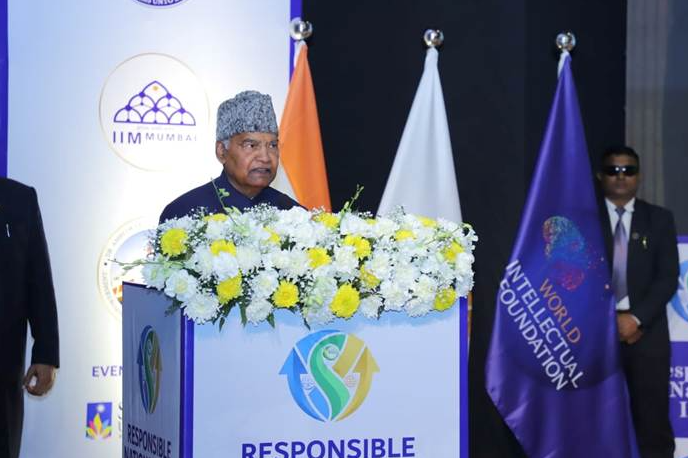
Context: Recently, the Responsible Nations’ Index was launched by former President Ram Nath Kovind to assess countries on ethical governance, global responsibility and sustainable development performance.
More on the News:
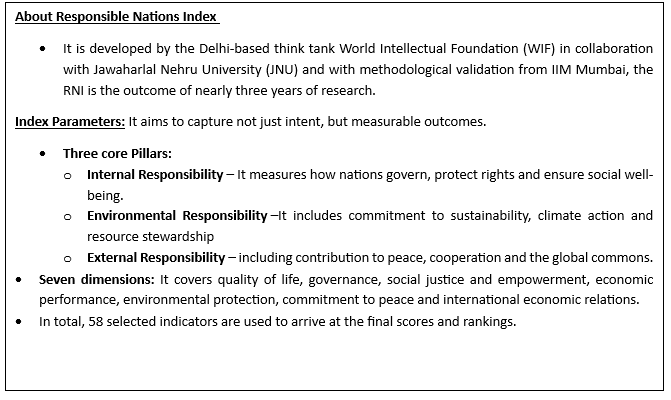
- The Responsible Nations Index (RNI) is a new global ranking that evaluates countries based on how responsibly they exercise their power, rather than the magnitude of their economic or military strength.
- Index aims to shift the focus of international rankings from traditional power metrics, such as GDP and military strength, to how responsibly nations exercise their power
- The index is based on data from global institutions, including the World Bank, United Nations agencies, and the World Justice Project, using the most recent data available up to 2023.
Key Findings of the Index:
Global Rankings:
- Top Performing Countries: Singapore topped the ranking with a score of 0.61945.
- Switzerland scored 0.58692 and Denmark 0.58372, ranking second and third, respectively.
- India’s Rank: India ranks 16th, with a score of 0.551513.
- India’s placement reflects relatively strong performance across governance, social responsibility and external engagement, positioning it among the more responsible nations globally.
- Lowest-Ranked Nations: South Sudan is ranked 152nd with a score of 0.37389.
- Syria is ranked 153rd, with a score of 0.37254.
- Ranked 154th, the Central African Republic stood last on the index with a score of 0.35715.
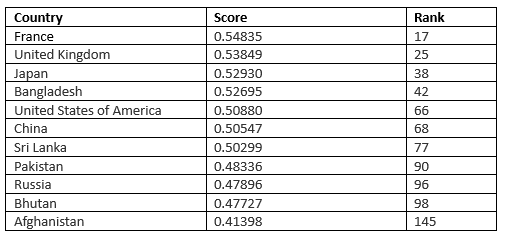
- Other Nations rankings:
Key Insights
- Rule of Law and welfare approach: Northern and eastern European countries consistently score high due to strong rule of law, inclusive welfare systems and long-term commitments to climate action.
- Performance of Emerging Economies: Emerging countries perform strongly in specific areas such as peacekeeping, renewable energy adoption and inclusive welfare delivery.
- Responsible national conduct: It depends less on the size of an economy and more on the quality of institutions, ethical governance and how equitably development benefits are shared.
- Several developing nations surpassed wealthier countries in areas such as environmental ethics, gender fairness, and social justice.
- Governance and Responsibility: The report also underlines that responsibility is driven by political will and institutional integrity rather than wealth alone.
Significance of the Index
- Global Accountability: This index allows the world to rank and debate responsibility, highlighting the need for accountability from all countries, including global powers.
- Objective Framework: It introduces a timely alternative framework for assessing leadership in the 21st century.
- It argues that the true measure of a nation lies not only in how powerful it is, but in how responsibly it chooses to act.
- Research Integration: RNI offered a solution by combining existing global research into a single, credible measure.
- For example: Research centers in Europe and Latin America track Chinese investments, and the Index brings this information together.
- Tools for introspection: The Index highlighted weaknesses, prompting nations to act and improve steadily each year.
- Recommendation: The Index suggested incorporating less tangible aspects such as mental health, happiness, equity, and social cohesion into the concept of responsibility.