
SYLLABUS
GS-2: Indian Constitution—Significant Provisions; Parliament and State Legislatures—Structure, Functioning, Conduct of Business; Important Aspects of Governance.
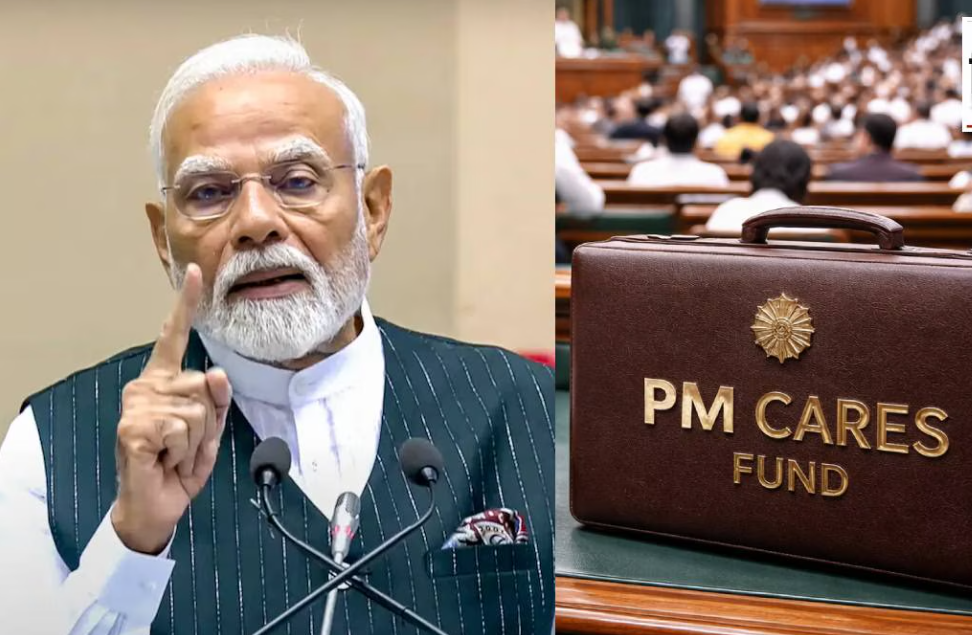
Context: The Prime Minister’s Office (PMO) has informed the Lok Sabha Secretariat that Parliament questions and matters related to PM CARES Fund, the Prime Minister’s National Relief Fund (PMNRF) and the National Defence Fund (NDF) are not admissible under Lok Sabha Rules.
More on the News
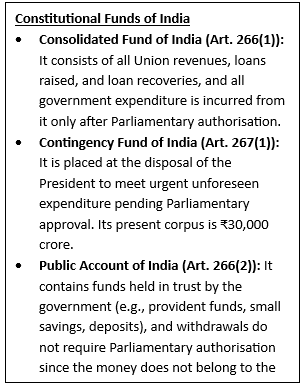
- The PMO reasoned that the corpus of these funds is entirely made up of voluntary public contributions and not from allocations from the Consolidated Fund of India.
- It cited Rule 41(2) (viii) and 41(2)(xvii) of the Rules of Procedure and Conduct of Business in Lok Sabha to argue that such questions and discussions are inadmissible in Lok Sabha.
- Rule 41(2) governs the right to ask questions in the Lok Sabha.
- Rule 41(2) (viii) states that “it shall not relate to a matter which is not primarily the concern of the Government of India”.
- Rule 41(2) (xvii) states “it shall not raise matters that are under the control of bodies or persons not primarily responsible to the Government of India”.
- Rule 41(2) governs the right to ask questions in the Lok Sabha.
About PM CARES Fund
- Establishment & Purpose: The Prime Minister’s Citizen Assistance and Relief in Emergency Situations Fund (PM CARES Fund) was created on 27 March 2020 to deal with public health emergencies and other distress situations, initially in response to the COVID-19 pandemic, and to provide relief and assistance to affected individuals.
- Legal Nature & Governance: It is registered as a Public Charitable Trust under the Registration Act, 1908, with the Prime Minister as ex-officio Chairperson and the Defence, Home and Finance Ministers as ex-officio Trustees.
- Funding Source: The fund is based entirely on voluntary contributions from individuals, organisations and institutions, and does not receive any budgetary support from the Government.
- Tax, CSR & Foreign Contributions: Donations qualify for 100% tax exemption under Section 80G of the Income Tax Act, 1961.
- Additionally,donations to the Fund qualify as Corporate Social Responsibility (CSR) expenditure, and the Fund is also permitted to receive foreign donations under FCRA provisions through a designated account.
About Prime Minister’s National Relief Fund (PMNRF)
- Establishment & Purpose: The PMNRF was set up in January 1948 with public contributions to assist displaced persons from Pakistan, and is now primarily used to provide immediate relief to victims of natural calamities, major accidents, and riots, as well as for certain medical assistance.
- Nature & Administration: It is not created by Parliament but functions as a trust recognised under the Income Tax Act. It operates from the Prime Minister’s Office, and disbursements are made with the approval of the Prime Minister, who serves as the Chairman.
- Funding Pattern: The fund is based entirely on voluntary public donations, receives no budgetary support, and its corpus is invested in bank fixed deposits for utilisation in relief measures.
- Tax Treatment: PMNRF enjoys income-tax exemptions, and donations qualify for 100% deduction under Section 80G of the Income Tax Act, 1961.
About National Defence Fund (NDF)
- Purpose & Beneficiaries: The National Defence Fund is meant for the welfare of members of the Armed Forces (including paramilitary forces) and their dependents, particularly for relief, rehabilitation, and support in cases of death, disability, or hardship arising from service.
- Administration & Governance: The Fund is managed by an Executive Committee chaired by the Prime Minister, with the Defence, Finance, and Home Ministers as members.
- The Finance Minister is the Treasurer of the Fund, and the Joint Secretary, PMO dealing with the subject is the Secretary of the Executive Committee.
- Source of Funds: It is financed entirely through voluntary public contributions and does not receive budgetary support from the Government of India.
- Custody & Accounts: The accounts of the Fund are maintained with the Reserve Bank of India, ensuring formal financial management and disbursement oversight.