
SYLLABUS
GS-I Prelims: Current events of national and international importance.
GS-3: Science and Technology- Developments and their Applications and Effects in Everyday Life; Indigenization of Technology and Developing New Technology.
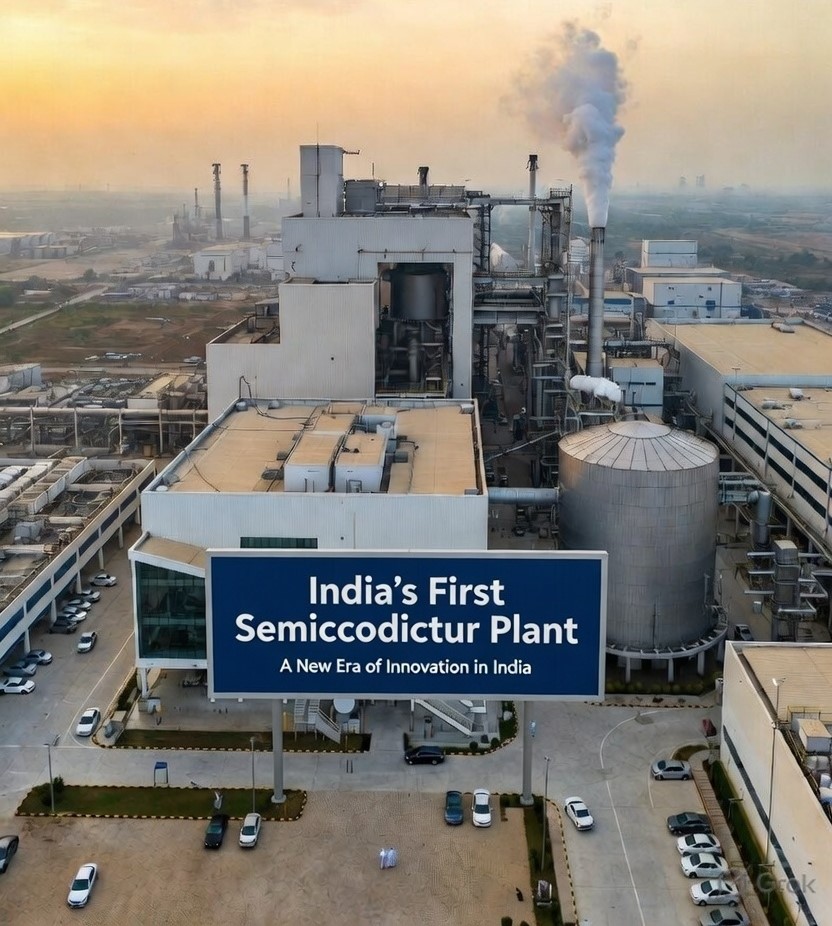
Context: The Prime Minister of India recently inaugurated India’s first semiconductor assembly and packaging facility at Sanand, Gujarat, marking a major milestone in India’s semiconductor manufacturing journey.
More on the News
- The inauguration marks a significant milestone in India’s semiconductor manufacturing journey, with the commencement of commercial production and shipment of the first made-in-India semiconductor memory modules from the Sanand ATMP facility.
- The facility inaugurated is an ATMP (Assembly, Test, Marking and Packaging) plant, a critical stage in semiconductor production where fabricated chips are packaged and tested before use in electronic devices.
- The plant will assemble, test, and package DRAM and NAND memory products, SSD storage modules and other advanced memory solutions for domestic and global markets.
- With an investment of about ₹22,516 crore by US-based Micron Technology, the facility symbolizes deepening India–US technology and supply-chain partnership in semiconductors.
Significance for India
- Strengthening Semiconductor Supply Chains: The global semiconductor market, valued at over USD 600 billion and projected to surpass USD 1 trillion by 2030, offers India an opportunity to reduce import dependence and strengthen supply chain resilience through domestic participation.
- Boost to Electronics Manufacturing: India’s electronics production exceeded USD 115 billion in 2023–24, and expanding domestic chip packaging capacity will support key sectors such as smartphones, automobiles, and consumer electronics.
- Employment and Skill Development: Semiconductor manufacturing is technology-intensive, generating high-skill employment in engineering and advanced manufacturing while also promoting specialised training and research collaborations in the semiconductor ecosystem.
- Integration into Global Value Chains: Establishment of the ATMP plant positions India as a reliable node in global semiconductor supply chains, complementing fabrication hubs in East Asia and the United States.
- Support for Emerging Technologies: Semiconductors are essential for artificial intelligence, electric vehicles, telecommunications, defence systems, and data centres, making domestic capability strategically important.
About the India Semiconductor Mission
- The India Semiconductor Mission (ISM) was launched in 2021 to build a comprehensive semiconductor and display manufacturing ecosystem in the country.
- Recently, the ISM 2.0 was announced in the Union Budget 2026-27 to expand the semiconductor ecosystem beyond fabrication by promoting chip packaging, compound semiconductors, semiconductor design, and supply chain infrastructure.
- The mission operates under the Semicon India Programme with a financial outlay of ₹76,000 crore.
- It aims to support the establishment of semiconductor fabrication units, assembly and packaging facilities, and design capabilities.
- The programme provides financial incentives, infrastructure support, and policy facilitation for global and domestic semiconductor firms.
- ISM also promotes the development of semiconductor design start-ups and encourages collaboration with academic and research institutions.
Other Initiatives for Developing India’s Semiconductor Sector
- Production Linked Incentive (PLI) for Electronics: Provides financial incentives for domestic manufacturing of electronic components and devices, creating demand for semiconductor production.
- Design Linked Incentive (DLI) Scheme: Encourages semiconductor design start-ups by offering financial and infrastructural support for chip design and prototyping.
- Semiconductor Fabrication Projects: Several fabrication and packaging projects have been approved across multiple states to develop a pan-India semiconductor ecosystem.
- International Technology Partnerships: India is strengthening collaboration with countries such as the United States, Japan, and Taiwan to secure technology, supply chains, and critical minerals.