
SYLLABUS
GS-3: Science and Technology- Developments and their Applications; Indigenization of Technology and Developing New Technology.
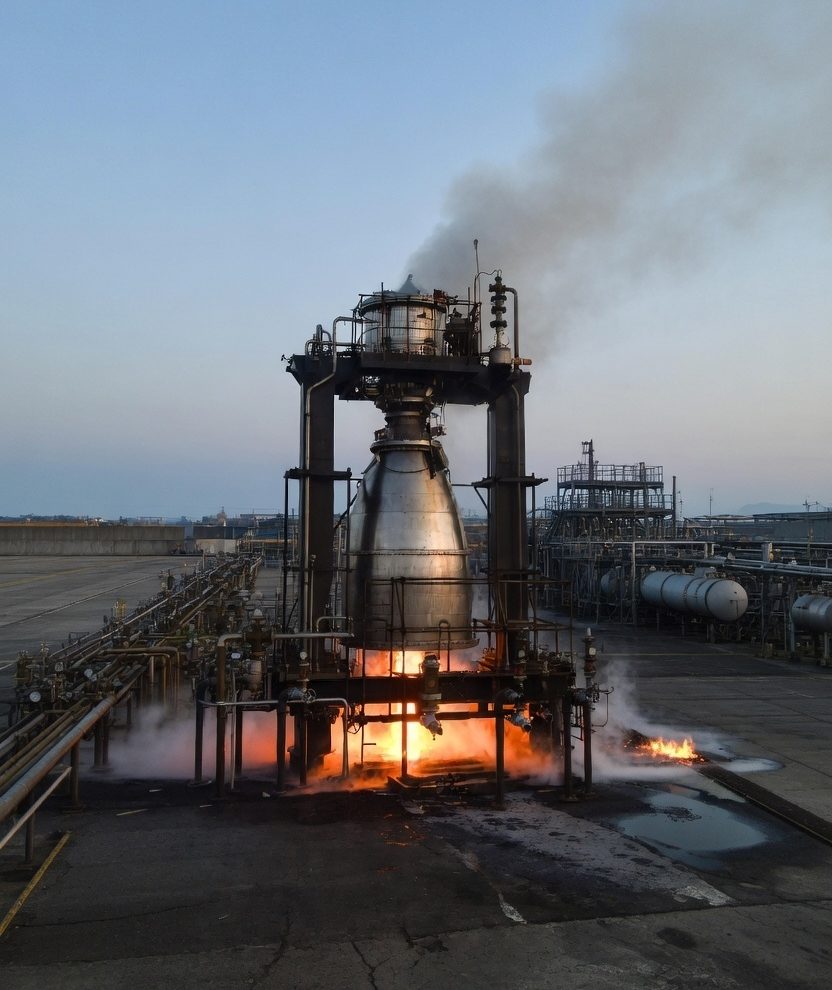
Context: Recently, the Indian Space Research Organisation (ISRO) successfully conducted a sea-level hot test of the CE20 cryogenic engine at the ISRO Propulsion Complex, Mahendragiri.
More on the News
- The test aimed to validate the uprated 22-tonne thrust capability of the CE20 engine, which powers the upper stage of India’s heavy-lift rocket LVM3.
- This development forms part of ISRO’s efforts to enhance the payload capacity of future missions using the future C32 cryogenic stage of LVM3.
- The CE20 engine has been human-rated for the Gaganyaan mission, making the test important for upcoming crewed spaceflight missions.
Key Highlights of the Test
- Higher Thrust Demonstration: The CE20 engine successfully operated at 22-tonne thrust, an increase from the earlier validated thrust level of about 19 tonnes, demonstrating enhanced capability compared with earlier tests at lower thrust levels.
- Sea-Level Testing Challenges: Cryogenic engines with high area-ratio nozzles are designed for vacuum conditions; testing them at sea level is difficult due to risks of flow separation, vibration and thermal stresses.
- Use of Advanced Systems: The test utilised technologies such as:
- Nozzle Protection System (NPS) to protect the engine nozzle during ground testing.
- Multi-element igniter for reliable engine ignition.
Significance of the Test
- Enhanced Payload Capability: Validation of the 22-tonne thrust CE20 engine supports the upgraded C32 cryogenic stage of the LVM3 launch vehicle, enabling the launch of heavier satellites, commercial GEO payloads, and future missions.
- Critical for Human Spaceflight: The successful test strengthens the reliability of the human-rated CE20 engine for the Gaganyaan mission, marking an important milestone in India’s preparation for its first crewed space mission.
- Boost to Indigenous Space Technology: The demonstration of fully indigenous cryogenic propulsion technologies—including the multi-element igniter, turbopump components and nozzle protection system—reinforces India’s push for technological self-reliance in advanced rocket engines.
- Advancing India’s Space Capability: Higher-thrust cryogenic propulsion strengthens India’s ability to undertake deep-space missions, large communication satellite launches and high-frequency launch operations, enhancing the country’s position among leading spacefaring nations.
About CE20 and LVM3
- CE20 Cryogenic Engine
- The CE20 Cryogenic Engine is India’s largest cryogenic rocket engine developed by ISRO.
- It uses liquid hydrogen as fuel and liquid oxygen as oxidiser, enabling high efficiency for upper-stage propulsion.
- The engine powers the upper cryogenic stage of LVM3 and plays a critical role in missions requiring high-energy propulsion.
- LVM3 Launch Vehicle
- The LVM3 launch vehicle (formerly GSLV Mk-III) is India’s most powerful operational rocket.
- It is capable of launching: heavy communication satellites into geostationary transfer orbit, spacecraft for deep-space missions, and crew modules for the Gaganyaan human spaceflight programme.
- With upgrades such as the higher-thrust CE20 engine and improved cryogenic stage, LVM3 is expected to significantly expand India’s launch capabilities in the coming years.