
- Informal Economy:
- Economic activities that do not fall within, or are inadequately covered by, the formal legal, taxation, registration, and social security systems.
- It includes small unincorporated enterprises, self-employment, casual workers, and informal employment within formal establishments.
- According to the ILO:
- Informal Sector – Enterprise-based concept.
- Informal Employment – Employment/job-based concept.
- Current Status in India:
- According to ASUSE-2025, there are approximately 7.92 crore non-agricultural unorganized enterprises.
- More than 12.8 crore workers are employed in these enterprises.
- According to PLFS-2025:
- Self-employed – 56.2%
- Casual workers – 20.2%
- Regular wage/salaried workers – 23.6%
- Approximately 90% of India’s workforce is associated with conditions of informal employment.
- The informal sector contributes approximately 45% of GDP.
- A very large number of enterprises are own-account and small-scale businesses.
- Major Characteristics:
- Unincorporated and small-scale enterprises.
- Labour-intensive production system.
- Low capital investment and limited use of modern technology.
- Informal accounting and limited financial records.
- Prevalence of verbal employment agreements.
- Limited social security coverage.
- High instability in income and employment.
- Limited access to formal credit and markets.
- Major Challenges:
- Low productivity – Outdated technology and low capital investment.
- Financial exclusion – Lack of collateral and formal records required for bank credit.
- Lack of social security – Limited access to pensions, insurance, sickness and maternity benefits.
- Employment insecurity – Lack of written contracts and grievance redressal mechanisms.
- Uncertainty in the gig economy – Instability in income, working hours and payments.
- Climate risks – Loss of working days and income due to heat and extreme weather conditions.
- Regulatory burden – Complex compliance requirements hinder the expansion of small enterprises.
- Lack of collective bargaining – Weak bargaining power of workers.
- Major Government Initiatives for Formalization
- e-Shram Portal – National database of unorganized workers.
- Udyam Assist Platform – Formal MSME recognition for informal micro-enterprises.
- PM SVANidhi – Micro-credit for street vendors.
- PM Vishwakarma Scheme – Training, financial and market support for traditional artisans.
- GeM and ONDC – Digital market access for small enterprises.
- Account Aggregator – Facilitates credit based on digital financial records.
- PMKVY 4.0 and RPL – Assessment and certification of informal skills.
- Skill India Digital Hub – Digital skill certificates and employment opportunities.
- Code on Social Security, 2020 – Provides a framework for bringing unorganized, gig and platform workers within the ambit of social security.
- Way Forward:
- Simple and low-cost taxation and compliance systems.
- Phased formalization for small enterprises.
- Cash-flow-based lending using digital transaction records.
- Shared machinery and testing facilities in industrial clusters.
- Effective social security for gig workers.
- Creche and care facilities for women workers.
- Access to skill certification and modern technology.
- Greater participation of micro and small enterprises in government procurement.
- Strengthening collective bargaining and grievance redressal mechanisms for informal workers.
- Conclusion: India’s informal economy is an important foundation of employment and livelihoods. Therefore, the objective should not be to penalize informal activities, but to promote inclusive formalization with dignity, security, productivity and opportunities.
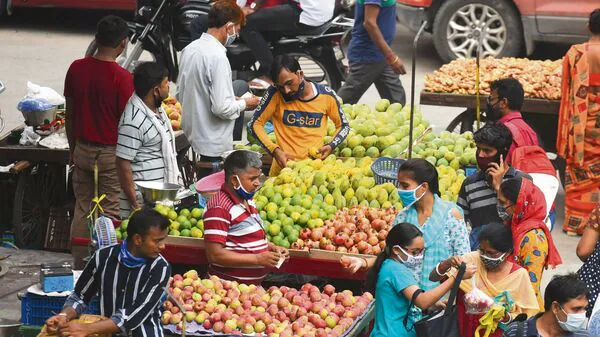
India’s Informal Economy: Status, Challenges and Formalization
Shares: