
SYLLABUS
GS-3: Conservation, environmental pollution and degradation; Infrastructure: Energy.
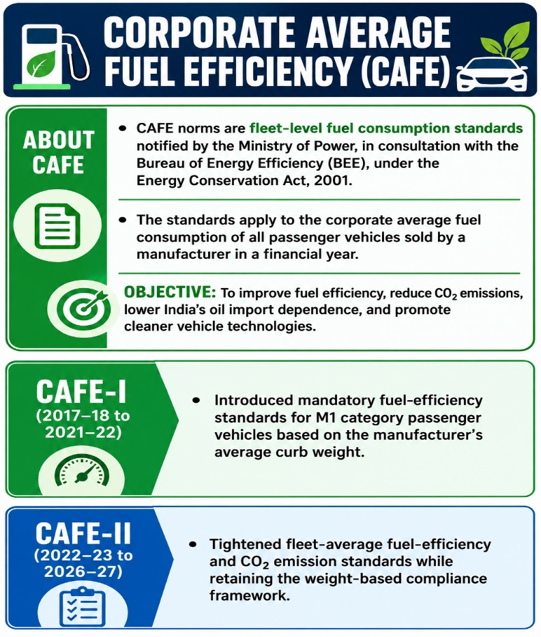
Context: The Ministry of Power has released the Draft Corporate Average Fuel Economy (CAFE)-III Norms, 2027 for stakeholder consultation to tighten fuel-efficiency and carbon dioxide (CO₂) emission standards for passenger vehicles from 1 April 2027.
Key Provisions and Major New Features of CAFE-III
- Applicability: The norms will apply to M1 category passenger vehicles (having not more than eight seats in addition to the driver’s seat) manufactured or imported for sale in India during 2027-28 to 2031-32.
- Implementation Period: The proposed norms will come into force from 1 April 2027 and will remain applicable for five years, replacing the existing CAFE-II regime.
- Compliance Assessment: Compliance will be assessed over two blocks: First Block (Three years) and Second Block (Two years).
- Progressively Stricter Fuel-Efficiency Targets: The draft proposes progressively tighter fleet-average fuel consumption targets:
- 2027-28: 3.996 litres/100 km (94.76 gCO₂/km)
- 2031-32: 3.3273 litres/100 km (78.90 gCO₂/km)
- The phased tightening of targets will provide OEMs with a clear and predictable regulatory pathway to progressively develop and deploy more fuel-efficient vehicle models.
- Carbon Neutrality Factors (CNFs): For the first time, the draft recognises the carbon-neutrality of ethanol, biofuel and Compressed Bio-Gas (CBG)by permitting specified reductions in declared tailpipe CO₂ emissions before compliance assessment.
- 8% CNF for the current ethanol blending level.
- Reductions for CBG and other biofuels based on prevailing blending levels.
- Technology Incentives: Manufacturers will be eligible to claim compliance benefits of up to 9 gCO₂/km for approved fuel-saving technologies, subject to a maximum benefit of 1 gCO₂/km per technology.
- Super Credits: Volume-based super credits will continue for:
- Battery Electric Vehicles (BEVs)
- Range-Extended Electric Vehicles (REEVs)
- Plug-in Hybrid Electric Vehicles (PHEVs)
- Strong Hybrid Electric Vehicles (SHEVs)
- Flex-Fuel Vehicles (FFVs)
- Credit-Debit Mechanism: Manufacturers exceeding prescribed targets will earn compliance credits, which may be carried forward within a compliance block. Those falling short may meet their obligations through:
- Carry-forward provisions;
- Voluntary pooling arrangements with other manufacturers; or
- Purchasing compliance credits from the Bureau of Energy Efficiency (BEE).
- Compliance Credits: Compliance credits will be denominated in units of 1 gCO₂/km, with an initial buy-out price of ₹2,500 per credit, increasing by ₹500 annually.
- Unutilised credits will lapse at the end of the compliance block.
- Penalty and Exemption: Manufacturers failing to comply will be liable for penalties under the Energy Conservation Act, while passenger vehicle manufacturers with annual sales of fewer than 1,000 units will remain exempt.
Significance
- Supports India’s Net Zero Vision: Accelerates decarbonisation of the transport sector, contributing to India’s commitments under the Paris Agreement and the target of achieving Net Zero emissions by 2070.
- Strengthens Energy Security: Lower fuel consumption in the passenger vehicle sector will reduce dependence on imported crude oil, improving India’s long-term energy security and reducing vulnerability to global oil price volatility.
- Enhances Global Competitiveness: Encourages the Indian automobile industry to align with evolving global fuel-efficiency and emission standards, improving its competitiveness in international markets.
- Drives Technological Innovation: Promotes investment in advanced automotive technologies, lightweight materials and energy-efficient powertrains, strengthening domestic manufacturing capabilities.
- Improves Environmental and Public Health: Lower vehicular emissions will improve urban air quality, reduce pollution-related health risks and support sustainable urban development