

SYLLABUS
GS-3: Environmental impact assessment.
Context: Recently, the Union Environment Ministry proposed amendments to the EIA Notification 2006 to prevent delays in environmental clearances when state appraisal bodies become non-functional.
More on the News
- The proposal seeks to modify provisions under the Environment Impact Assessment Notification 2006, which regulates environmental approval for development projects.
- The amendment proposes the creation of two new bodies, the Standing Authority on Environment Impact Assessment (SAEIA) and the Standing Committee on Environment Impact Appraisal (SCEIA) for each state and Union Territory to ensure continuity in environmental clearances.
- The ministry stated that lapses in the functioning of state appraisal bodies have repeatedly halted environmental clearances and created a backlog of project proposals.
Key Provisions of the Draft Amendment
- Function of New Bodies: The two new bodies will function at the state level by evaluating development projects categorised as Category B and providing environmental clearance in a timely manner.
- Category B projects include construction, buildings, mining, and industries.
- Replacement of Lapsed State Bodies: The new bodies will take over functions when the State Environment Impact Assessment Authority (SEIAA) and the State Expert Appraisal Committee (SEAC) become non-functional due to delays in reconstitution.
- Administrative Continuity in Clearances: The proposal aims to ensure that environmental clearance decisions continue even when state-level expert bodies lapse or fail to meet regularly.
- Automatic Transfer of Delayed Proposals: The amendment introduces a mechanism where project proposals will be transferred to the new standing committees if the state expert committee fails to complete appraisal within 120 days.
- Decision by Standing Authority: If the state environmental authority does not communicate a decision within the prescribed time, the proposal will be transferred to the standing authority, which will decide the case within thirty days.
Existing EIA Institutional Framework
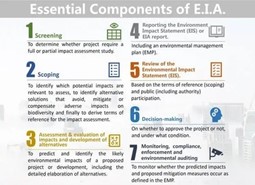
- The Environment Impact Assessment Notification 2006 created a scientific appraisal system for environmental decision-making in India.
- The system requires project proposals to be evaluated by expert committees composed of professionals from environmental science, engineering, ecology, law and public administration.
- The expert committees are designed to ensure that environmental decisions are based on multidisciplinary scientific assessment rather than purely administrative considerations.
- Under EIA, there are two categories of projects:
- A category Projects: Projects falling under the A category go to MoEFCC for clearance.
- B category Projects: Projects falling under this category go to the State government for clearance, which is further categorised into B1 and B2 projects.
Concerns and Institutional Implications
- Experts noted that the amendment places greater emphasis on procedural continuity of project approvals rather than strengthening expert appraisal institutions.
- The draft allows the central government to appoint ex-officio members to the new standing authorities, which may reduce the emphasis on scientific expertise in environmental decision-making.
- Critics argue that bypassing expert appraisal bodies may weaken environmental scrutiny of development projects.
- The proposal reflects a broader shift in environmental governance where administrative efficiency and faster approvals are increasingly prioritised in the regulatory framework.