
SYLLABUS
GS-2: Role and structure of the Executive, Judiciary, Parliament, and State Legislatures; powers, privileges, and functioning.
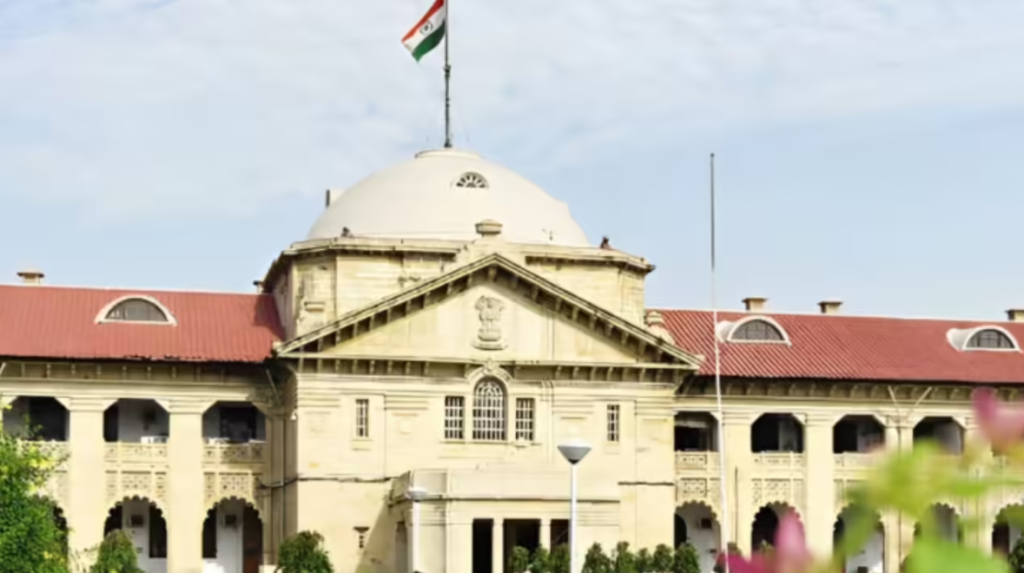
Context: Recently, the Supreme Court Collegium approved the proposal for the appointment of five retired judges as ad hoc judges of the Allahabad High Court under Article 224-A of the Constitution of India.
More on the News
• The appointments have been made under Article 224A for a tenure of two years.
• The names were forwarded by the Allahabad High Court and approved by the Supreme Court Collegium after due consideration.
• The move follows a request by the Chief Justice of India to High Court Chief Justices to recommend suitable retired judges for ad hoc appointments.
• Judges approved- Justices Mohd Faiz Alam Khan, Justice Mohd Aslam, Justice Syed Aftab Husain Rizvi, Justice Renu Agarwal, and Justice Jyotsna Sharma.
• As per the National Judicial Data Grid, the High Court together has about 63.6 lakh pending cases, with over 12 lakh cases pending in the Allahabad High Court alone, necessitating extraordinary measures.
Article 224A of the Constitution
• Article 224A is often described as a “dormant provision” of the Indian Constitution.
• It was inserted by the Fifteenth Constitutional Amendment Act, 1963.
• It empowers the Chief Justice of a High Court, with the previous consent of the President of India, to request a retired High Court judge to “sit and act as a judge” of the High Court.
• The consent of the retired judge is mandatory.
• The provision is invoked to deal with the unprecedented situations, especially heavy case backlogs in High Courts.
• During the tenure:
- Such judges enjoy all jurisdiction, powers, and privileges of a High Court judge.
- They are entitled to allowances as determined by the President.
• However, they shall not otherwise be deemed to be judges of that High Court (i.e., they are not part of the permanent cadre).
Past Use
• Article 224A was invoked for the first time in 1972 for appointing Justice Suraj Bhan (Madhya Pradesh High Court) as an ad hoc judge for the disposal of election petitions.
• The provision has been used very sparingly since then.
Appointments Procedure Under Article 224A
• As per the 1998 Memorandum of Procedure (MoP) framed after Supreme Court Advocate-on-Record Association v. Union of India (1998) (Second Judges case), the process is a collaborative effort between the judiciary and the executive.
- The Chief Justice of India obtains the consent of the retired judge.
- The CJI communicates the recommendations to the Chief Minister of the concerned State, specifying tenure.
- The Chief Minister, in consultation with the Governor, forwards the proposal to the Union Ministry of Law and Justice.
- The Union law minister consults the CJI and forwards the advice to the Prime Minister.
- The Prime Minister advises the President of India.
- Upon Presidential consent, the Department of Justice informs the High Court and the state government, and notification is issued in the Gazette of India.
• Ad Hoc Judges in the Supreme Court: Article 127 provides for the appointment of ad hoc judges when there is a lack of quorum.
- Appointment is made by the CJI, with prior consent of the President, in the consulatation with the chief justice of the concerned High Court.
- Only a sitting High Court judge qualified for a Supreme Court appointment is eligible.
• Ad Hoc Judges in High Courts: Article 224A allows retired judges to be requested to sit and act as judges.
- Appointing Authority: The Chief Justice of the High Court, with the President’s consent.
- Purpose: Address serious backlog, especially long-pending criminal appeals.
- Appointment is voluntary, based on consent to the retired judge.