

SYLLABUS
GS-3: Indian Economy and issues relating to planning, mobilisation of resources, growth, development and employment.
Context: India observed National Startup Day on January 16, 2026, marking a decade since the launch of the Startup India Initiative in 2016.
More on the News
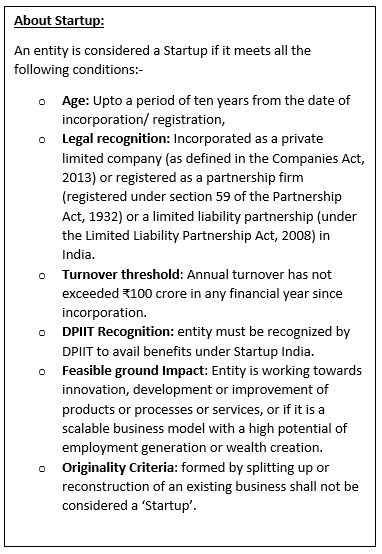
- The day commemorates the launch of the Startup India initiative (January 16, 2016) and recognises the role of entrepreneurs in driving innovation and economic growth.
- The initiative has evolved from a policy push into a full lifecycle support system covering ideation, funding, mentorship, and scale-up.
Startup India Initiative
- Startup India is a flagship initiative of the Government of India launched in January 2016 and led by the Department for Promotion of Industry and Internal Trade (DPIIT) under the Ministry of Commerce and Industry.
- It was started to build a strong and inclusive startup ecosystem that encourages innovation, supports entrepreneurship, and generates large-scale employment.
- The initiative aims to transform India into a global innovation hub by reducing regulatory barriers, improving access to capital, and strengthening industry-academia collaboration.
• The initiative is built on three main pillars:
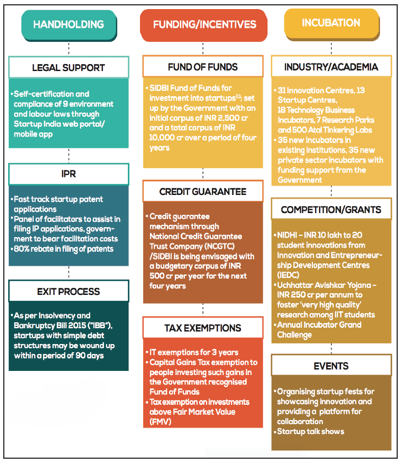
- Simplification and Handholding: Reducing regulatory burdens through self-certification and faster exit mechanisms.
- Funding Support and Incentives: Providing tax exemptions and capital through various government-backed funds.
- Industry-Academia Partnership and Incubation: Establishing innovation hubs and mentorship platforms like MAARG.
Achievements of the Startup India Initiative in 10 Years (2016–2026)
• Global Scale and Ranking: Startup India has transformed India into the world’s third-largest startup ecosystem, expanding from fewer than 500 startups in 2016 to over 2 lakh startups today, reflecting unprecedented entrepreneurial scale.
• Rise of Unicorns and Wealth Creation: The number of unicorns has grown from 4 in 2014 to nearly 125 active unicorns, demonstrating strong value creation, investor confidence, and global competitiveness of Indian startups.
• Employment Generation and Economic Impact: Startups have emerged as major job creators, generating lakhs of direct and indirect jobs, with 2025 alone witnessing the registration of around 44,000 new startups, the highest annual addition so far.
• Democratisation of Entrepreneurship: Startup India has broken metropolitan and elite barriers, enabling youth from Tier-II, Tier-III cities and rural areas to build enterprises focused on grassroots and real-world problem solving.
- Around fifty percent of the startups originate from Tier II and Tier III cities.
• Women-led Startup Growth: More than 45% of recognised startups now have at least one woman director or partner, positioning India as the world’s second-largest ecosystem for women-led startup funding and strengthening inclusive growth.
• Robust Innovation Ecosystem: Initiatives such as Atal Tinkering Labs, hackathons, incubators, and accelerators have institutionalised innovation from school to startup stage, ensuring ideas are nurtured rather than abandoned.
- According to the StartupBlink Global Startup Ecosystem Index 2025, India is ranked around 22nd globally among startup ecosystems.
• Regulatory Reforms: Through measures like self-certification, decriminalisation of over 180 provisions under the Jan Vishwas Act, and simplified exits, the initiative has reduced compliance burden and enhanced trust-based governance.
• Access to Capital and Financial Support: Government-backed mechanisms such as the Fund of Funds for Startups with over ₹25,000 crore investments, Seed Fund schemes, and Credit Guarantee frameworks have ensured that lack of collateral does not stifle innovation.
• Public Procurement and Market Access: Through GeM (Government e-Marketplace), nearly 35,000 startups and small businesses have received around 5 lakh orders worth ₹50,000 crore, integrating startups into government supply chains.
Issues & Challenges with Startup India Initiative
- Low Survival Rate: Weak product-market fit, Limited post-incubation support, Market access issues, etc. cause High failure rates in Indian startups.
- Weak Industry–Academia Linkages: Insufficient commercialization of research from universities, limited skilled and employable workforce dilutes the startup ecosystem.
- Limited Deep-Tech Startups: India’s startup growth remains skewed toward E-commerce, Fintech and Ed-tech sectors.