
SYLLABUS
GS-1: Important Geophysical Phenomena such as earthquakes, Tsunami, Volcanic activity, cyclones, etc.
GS-3: Disaster and disaster management.
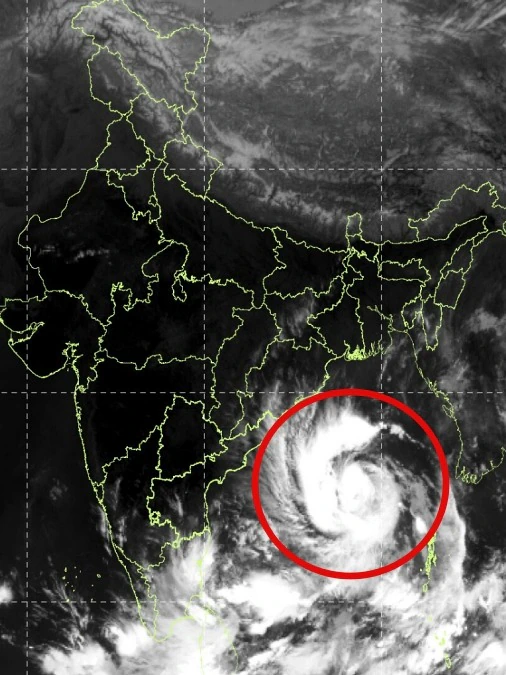
Context: Cyclone Arnab, the first cyclone of 2026 over the North Indian Ocean, made landfall along the Andhra Pradesh–Yanam coast on 28 October 2026 as a very severe cyclonic storm before weakening.
More on the News
- Cyclone Arnab made landfall on 28 October between Bapatla and Visakhapatnam, with sustained winds of 125–135 kmph and gusts up to 150 kmph.
- Originating on 23 October, it intensified into a very severe cyclonic storm by 27 October.
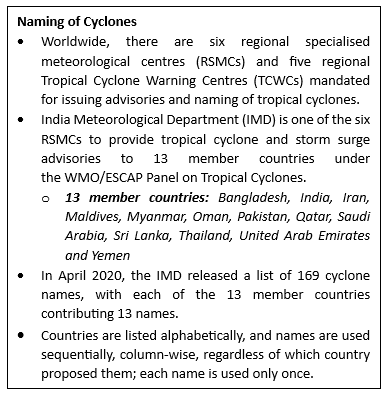
- Bangladesh proposed the name “Arnab”, meaning “ocean” or “sea” in Bengali, under the WMO–UNESCAP regional naming system.
Reasons Behind Cyclone Arnab’s Intensification
- Warm Ocean Waters: Sea surface temperatures of around 26°C or higher, with sufficient heat extending to depths of 50–100 metres, provide energy for tropical cyclone formation and intensification.
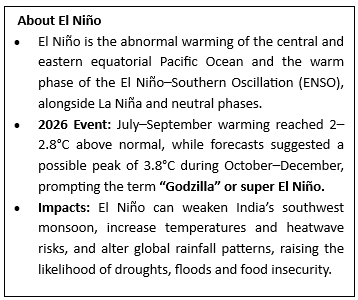
- Influence of El Niño: El Niño alters atmospheric circulation and wind patterns; IMD Director-General Mrutyunjay Mohapatra noted that cyclones during El Niño tend to form closer to the equator and may move towards Andhra Pradesh and Tamil Nadu.
- Favourable Atmospheric and Oceanic Conditions: Wind shear, atmospheric boundary layers, convection, upper-ocean circulation and air–sea interactions collectively influence cyclone intensification, so El Niño alone cannot explain Arnab’s rapid strengthening.
- Rapid Intensification and Precedent: Arnab intensified from a low-pressure system on 23 October to a very severe cyclonic storm by 27 October, while Cyclone Hudhud (2014), which struck Andhra Pradesh during an El Niño year, provides a relevant precedent.
About Tropical Cyclones
- Tropical cyclones are intense low-pressure systems that form over warm ocean waters in tropical regions.
- They are characterised by:
- Strong winds exceeding 119 km/h
- Heavy rainfall and storm surges
- They form under specific conditions, including:
- Sea surface temperatures above 26–27°C
- High humidity and low vertical wind shear
- These systems are known by different names across regions, such as cyclones in the Indian Ocean, hurricanes in the Atlantic, and typhoons in the Pacific.
- Climate change is influencing cyclone behaviour, leading to greater intensity, rapid intensification, and changing spatial distribution.
- On the basis of wind speed and the degree of potential destruction, Cyclones can be categorized as:
- Low Pressure: Wind speeds below 31 km/h
- Depression: Wind speeds between 32–61 km/h
- Cyclonic Storm: Wind speeds between 62–88 km/h
- Severe Cyclonic Storm: Wind speeds between 89–117 km/h
- Very Severe Cyclonic Storm: Wind speeds between 118–167 km/h
- Extremely Severe Cyclonic Storm: Wind speeds between 168–221 km/h
- Super Cyclone: Wind speeds exceeding 221 km/h