
- In News:
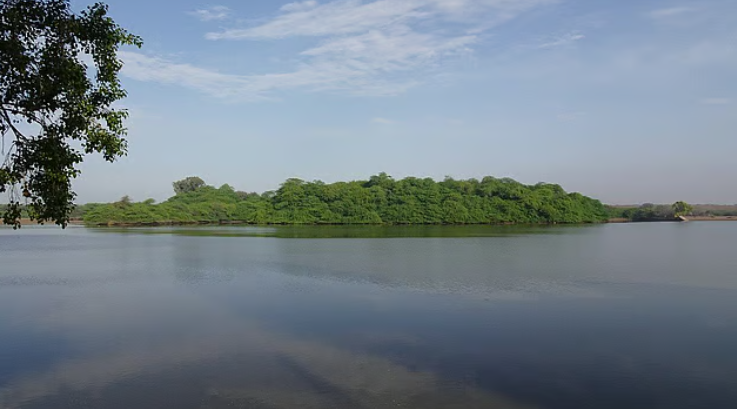
- India’s 101st Ramsar Site: Glaw Lake, Arunachal Pradesh; it was designated on 3 August 2026, taking the total number of Ramsar Sites in India to 101. It is the first Ramsar Site of Arunachal Pradesh and is located in the Kamlang Tiger Reserve and Wildlife Sanctuary.
- UNESCO Ramsar Convention:
- It is an international treaty.
- It was signed in 1971 in the city of Ramsar, Iran.
- It is also known as the Convention on Wetlands of International Importance.
- Objective: To conserve wetlands and promote their wise use.
- Came into force: December 1975.
- India signed: 1 February 1982.
- World Wetlands Day: 2 February.
- Information Related to Ramsar Sites in India:
- Total Number: As of August 2026, with the inclusion of Glaw Lake in Arunachal Pradesh in the Ramsar Convention list, India has a total of 101 Ramsar Sites. The 101st Ramsar Site was designated on 3 August 2026.
- First Ramsar Sites: Chilika Lake (Odisha) and Keoladeo National Park (Rajasthan) – designated in 1981.
- State with the Highest Number of Sites: Tamil Nadu currently has the highest number of Ramsar Sites in India.
- Total Area: Approximately 1,387,741 hectares.
- Governing Authority: Ministry of Environment, Forest and Climate Change (MoEFCC), Government of India.
- Ramsar Sites in Madhya Pradesh: 5
- Bhoj Wetland – Bhopal – 2002
- Sakhya Sagar – Shivpuri – 2022
- Sirpur Wetland – Indore – 2022
- Yashwant Sagar – Indore – 2022
- Tawa Reservoir – located near Itarsi at the confluence of the Tawa and Denwa Rivers – August 2024
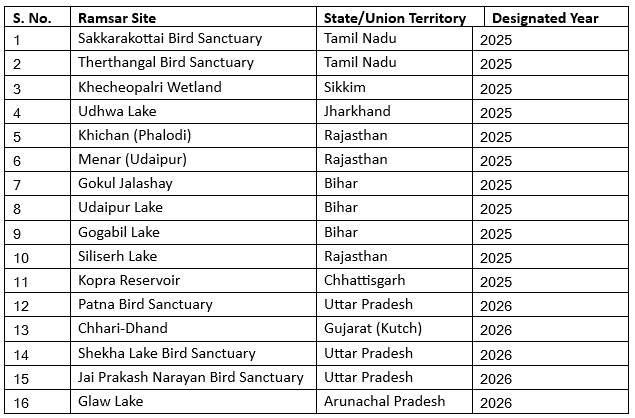
- Recently Added Ramsar Sites in India:
- Montreux Record:
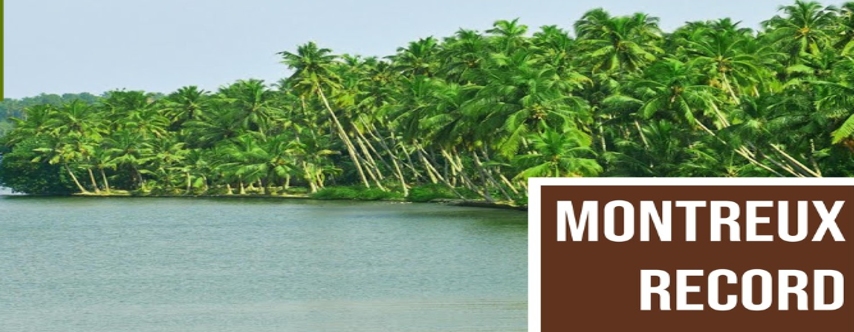
- The Montreux Record is primarily a register under the Ramsar Convention containing wetlands of international importance.
- The Montreux Record is a list of internationally important wetland sites where changes in ecological character have occurred, are occurring, or are likely to occur due to technological developments, pollution, or other human interference.
- It was established in 1990 and aims to provide special conservation attention and technical assistance to sites that are under threat.
- It is included as part of the Ramsar List.
- Currently, two wetlands in India are included in the Montreux Record:
- Keoladeo National Park – Rajasthan (1990)
- Loktak Lake – Manipur (1993)
- Chilika Lake, Odisha, was included in the Montreux Record (the list of threatened wetlands) in 1993, but after successful restoration, it was removed from the record in 2002.
- United Nations Educational, Scientific and Cultural Organization (UNESCO):
- Full Form: United Nations Educational, Scientific and Cultural Organization (UNESCO)
- It is a specialized agency of the United Nations (UN).
- Established: 16 November 1945
- Objective: It seeks to establish peace through international cooperation in the fields of education, science and culture. It also aims to strengthen mutual understanding and cooperation among countries.
- Headquarters: Paris
- UNESCO has been entrusted with leading the Global Education Agenda 2030 through Sustainable Development Goal 4 (SDG-4).
Conclusion: Ramsar Sites are wetlands of international importance, and their conservation is crucial for biodiversity, water security, flood control, and local livelihoods.