
SYLLABUS
GS-3: Conservation, environmental pollution and degradation, environmental impact assessment.
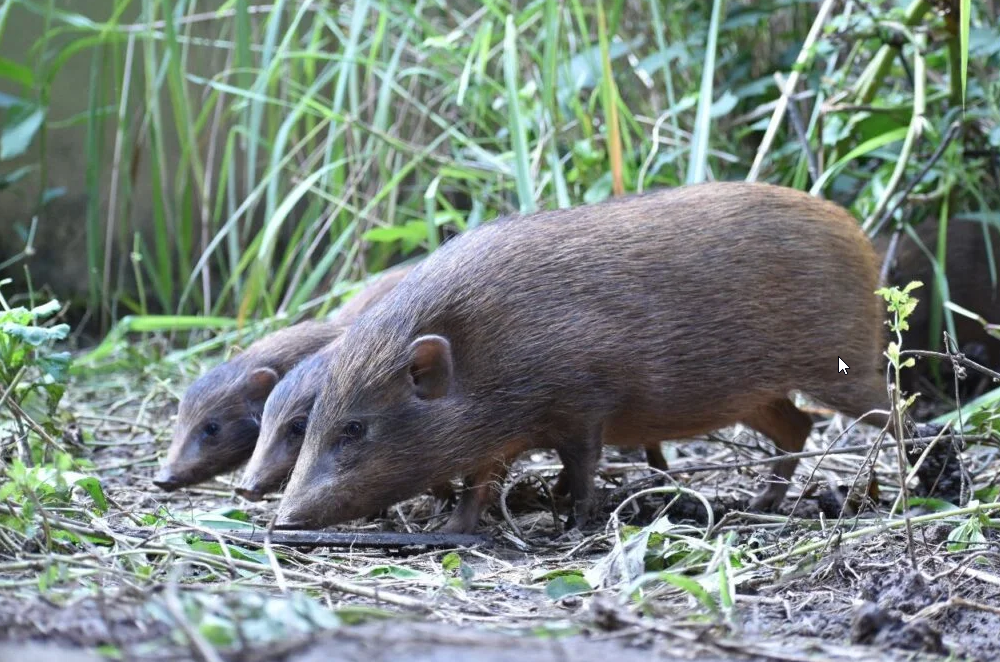
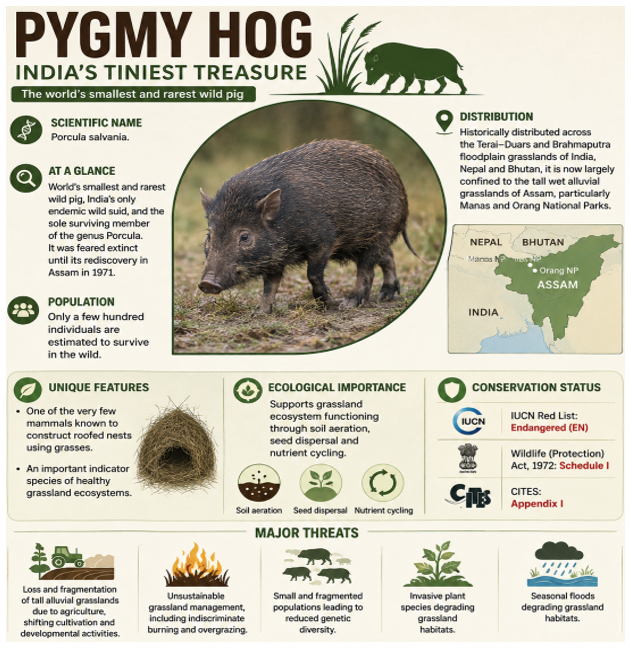
Context: The Standing Committee of the National Board for Wildlife (SC-NBWL) has recommended including the Pygmy Hog under the Species Recovery Programme of the Integrated Development of Wildlife Habitats (IDWH) scheme.
Significance of the Decision
- Strengthens Species Recovery: Brings one of the world’s rarest mammals under a nationally coordinated recovery programme with dedicated financial and technical support.
- Conserves Grassland Ecosystems: As an indicator species, conserving the Pygmy Hog also safeguards the threatened tall alluvial grasslands and their associated biodiversity in the Brahmaputra floodplains.
- Builds on Conservation Success: Reinforces the Pygmy Hog Conservation Programme (PHCP), which has successfully combined captive breeding, habitat restoration and scientific reintroductions to revive wild populations.
- Advances Science-based Conservation: Reflects India’s growing emphasis on species-specific, science-based conservation, while strengthening India’s commitment to biodiversity conservation and ecosystem-based management.
About Recovery Programme for Critically Endangered Species
- Implementation: A flagship component of the Centrally Sponsored Scheme – Integrated Development of Wildlife Habitats (IDWH) under the Ministry of Environment, Forest and Climate Change (MoEFCC).
- Objective: To secure the long-term survival of highly threatened species through species-specific, science-based recovery plans.
- Major Components:
- Habitat restoration and protection.
- Population monitoring and scientific research.
- Conservation breeding and reintroduction.
- Threat mitigation and landscape management.
- Community participation and awareness.
About the National Board for Wildlife (NBWL)
- Statutory Body: Constituted under the Wildlife (Protection) Act, 1972 as the apex advisory body on wildlife conservation in India.
- Chairperson: Prime Minister of India.
- Composition: Includes Union Ministers, Members of Parliament, Chief of Army Staff, representatives of States/UTs, eminent conservationists, NGOs and experts in wildlife and ecology.
- Standing Committee (SC-NBWL): Chaired by the Union Minister for Environment, Forest and Climate Change; examines proposals requiring wildlife clearance and considers policy and conservation matters on behalf of the NBWL.
- Key Functions:
- Promote conservation and development of wildlife and forests.
- Frame policies and advise the Central Government on wildlife conservation.
- Approve projects and activities within or around Protected Areas requiring NBWL clearance.
- Recommend species-specific conservation and recovery measures, including inclusion under the Species Recovery Programme.
- Review the progress of wildlife conservation programmes and suggest measures for strengthening protected area management.
Sources:
Thehindu
Britannica
Downtoearth