SYLLABUS
GS-3: Issues related to Direct and Indirect Farm Subsidies.
GS-2: Important International institutions, agencies and fora – their structure, mandate.
Context: India recently deposited its Instrument of Acceptance of the World Trade Organization (WTO) Agreement on Fisheries Subsidies, becoming the 123rd WTO Member to join the Agreement.
More on the News
- India deposited its Instrument of Acceptance on 20 July 2026. The Agreement entered into force on 15 September 2025, after securing acceptance by the required two-thirds of WTO Members.
- The Agreement was adopted by consensus at the 12th WTO Ministerial Conference (MC12) held in Geneva in June 2022.
- It is the first multilateral WTO agreement with environmental sustainability at its core, aiming to curb harmful fisheries subsidies that contribute to overfishing and depletion of marine resources.
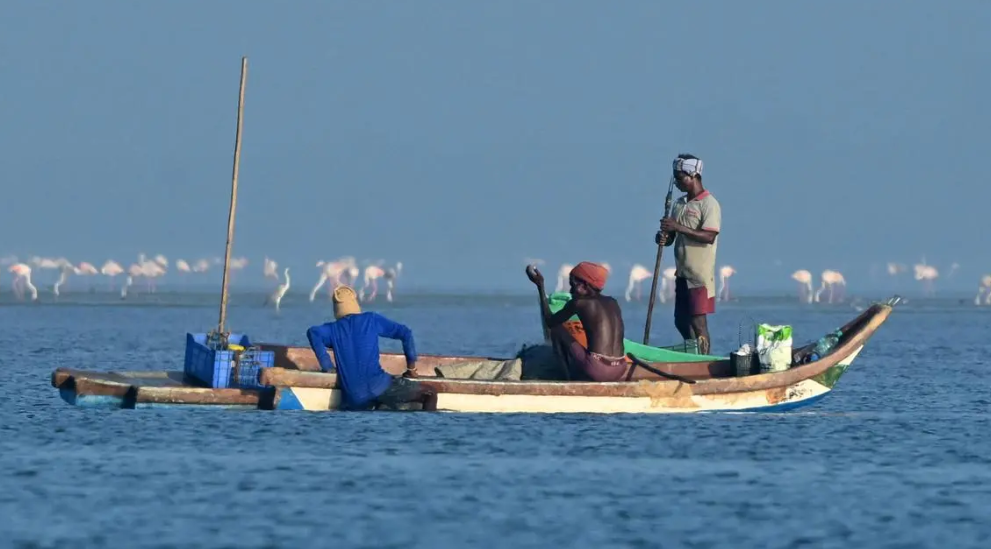
- India has consistently advocated a balanced approach in the negotiations, emphasising the need to conserve marine resources while protecting the livelihoods of traditional and artisanal fishers.
- The Agreement seeks to create a more equitable global fisheries regime by disciplining harmful subsidies that primarily benefit large industrial fishing fleets, thereby supporting countries like India where fisheries are predominantly small-scale.
Need for the Agreement
- According to the WTO, 35.5% of global marine fish stocks were overfished in 2021, compared to only 10% in 1974, highlighting the growing need to curb harmful fisheries subsidies.
- Governments provide an estimated USD 35 billion annually in fisheries subsidies worldwide, of which around USD 22 billion are considered harmful, contributing to overfishing and depletion of marine fish stocks.
About the WTO Agreement on Fisheries Subsidies
- Objective: The Agreement seeks to promote the conservation and sustainable use of marine fisheries resources by disciplining subsidies that contribute to overfishing and unsustainable fishing practices.
- Prohibited Subsidies: It prohibits subsidies granted for:
- Illegal, Unreported and Unregulated (IUU) fishing;
- Fishing of overfished stocks; and
- Fishing or fishing-related activities in unregulated areas of the high seas.
- Special and Differential Treatment (S&DT): The Agreement provides appropriate flexibilities, along with technical assistance and capacity-building support, to developing and least-developed country Members for effective implementation.
- Scope: The Agreement applies to marine wild capture fisheries and fishing-related activities at sea. Aquaculture and inland fisheries are excluded from its ambit.
Significance
- Promotes Sustainable Fisheries: By discouraging harmful subsidies, the Agreement supports the conservation of marine fish stocks, ensuring long-term food security and livelihood security.
- Protects Traditional and Small-scale Fishers: The Agreement recognises the developmental needs of developing countries by providing appropriate flexibilities while addressing unsustainable fishing practices.
- Enhances India’s Export Credibility: Adherence to internationally accepted sustainability standards strengthens India’s reputation as a responsible seafood exporter in global markets.
- Limited Impact on Aquaculture Exports: Since aquaculture and inland fisheries remain outside the scope of the Agreement, India’s aquaculture-based shrimp exports—which account for a major share of its seafood exports—remain largely unaffected, ensuring continued export competitiveness.
- Reinforces Rules-based Multilateral Trading: India’s acceptance reaffirms its commitment to a rules-based multilateral trading system.
India’s Domestic Framework
- India’s implementation of the Agreement is supported by recent policy measures aimed at promoting sustainable fisheries and strengthening marine resource governance:
- Sustainable Harnessing of Fisheries in the Exclusive Economic Zone (EEZ) Rules, 2025 regulate responsible fishing within India’s EEZ through licensing, monitoring and conservation measures.
- Guidelines for Sustainable Harnessing of Fisheries in the High Seas by Indian-Flagged Fishing Vessels, 2025 provide a regulatory framework for sustainable fishing operations beyond India’s EEZ.
- Pradhan Mantri Matsya Sampada Yojana (PMMSY) complements the Agreement through capacity-building, fisheries infrastructure, monitoring, conservation and fisher welfare initiatives.