
SYLLABUS
GS-3: Conservation, environmental pollution and degradation, environmental impact assessment.
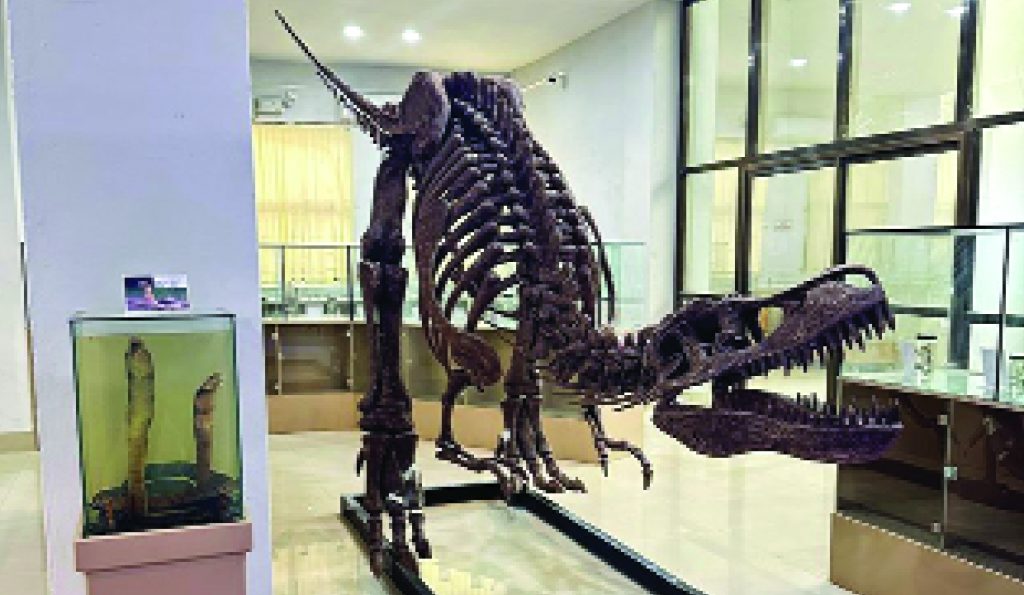
Context: The Ministry of Environment, Forest and Climate Change has notified the Natural History Museum (NHM), Mizoram University, Aizawl, as India’s 21st Designated Repository under Section 39 of the Biological Diversity Act, 2002, on the recommendation of the National Biodiversity Authority.
About the Mizoram’s Natural History Museum (NHM)
- Established: 2022 under the aegis of Mizoram University.
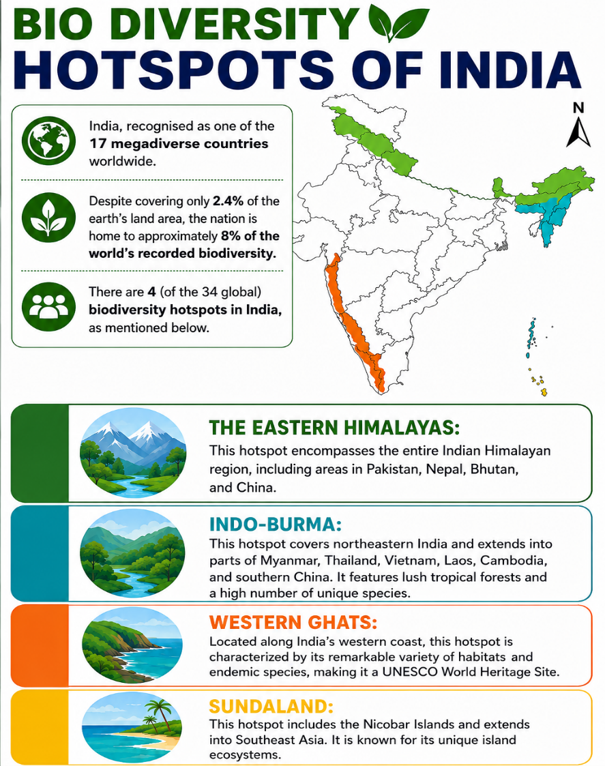
- Location: Aizawl, Mizoram, within the Indo-Burma Biodiversity Hotspot, one of the world’s richest biodiversity regions.
- Designation: Became India’s 21st Designated Repository.
- Current Collection: Houses more than 500 biological specimens, including herbarium sheets and wet-preserved collections.
- Scientific Expertise: Has a multidisciplinary team specialising in seven taxonomic groups, including Pteridophytes, Macrofungi, Fishes, Reptiles, Amphibians, Moths, Beetles and butterflies
- Repository Functions:
- Preserve voucher specimens of flora and fauna.
- Serve as the depository for type specimens of newly discovered species.
- Support documentation and conservation of endemic species such as Leptobrachella tamdil.
- Regional Importance: Supports conservation of the biodiversity-rich North-East, which harbours over 7,500 flowering plant species and 2,000+ faunal species.
About the Designated Repositories
- Institutions notified by the Central Government under Section 39 of the Biological Diversity Act, 2002 for the safe custody and preservation of authenticated biological specimens.
- Purpose:
- Preserve voucher specimens and reference samples.
- Maintain holotypes, isotypes and paratypes of newly discovered species.
- Facilitate species identification, traceability and scientific research.
- Safeguard biological resources for long-term conservation and ecological restoration.
- Key Functions:
- Assign unique accession numbers to deposited specimens.
- Preserve newly discovered taxa indefinitely.
- Maintain deposited biological resources for at least five years, or longer as directed by the National Biodiversity Authority.
- Make specimens available for research within India subject to provisions of the Act.
- Existing Repository Network: Includes institutions such as the Botanical Survey of India (BSI), Zoological Survey of India (ZSI), Forest Research Institute (FRI), National Bureau of Plant Genetic Resources (NBPGR), National Institute of Virology (NIV) and other specialised repositories.
About the Biological Diversity Act, 2002
- Objective: To conserve biological diversity, promote sustainable use of biological resources and ensure fair and equitable sharing of benefits arising from their use.
- Implemented Through a Three-tier Institutional Framework:
- National Biodiversity Authority (NBA) at the national level.
- State Biodiversity Boards (SBBs) and Union Territory Biodiversity Councils (UTBCs) at the State/UT level.
- Biodiversity Management Committees (BMCs) at the local level.
- Section 39:
- Empowers the Central Government to designate institutions as repositories for different categories of biological resources.
- Requires discoverers of new taxa to notify the designated repository and deposit voucher/type specimens.
- Supporting Mechanisms:
- People’s Biodiversity Registers (PBRs) prepared by BMCs.
- Access and Benefit Sharing (ABS) mechanism under the Act.
- National Biodiversity Authority Fund for conservation and benefit sharing.
- Amendment: The Biological Diversity (Amendment) Act, 2023strengthened implementation by promoting research, innovation, traditional knowledge and ease of compliance.
Significance
- Strengthens India’s biodiversity governance and scientific infrastructure by expanding the national repository network.
- Enables preservation of biological specimens closer to their natural source, improving documentation and reducing logistical challenges.
- Enhances conservation of endemic and lesser-studied taxa from the biodiversity-rich North-East.
- Supports taxonomic research, species identification, traceability and long-term ecological restoration.
- Strengthens collaboration with the Mizoram State Biodiversity Board, regional research institutions and national repositories.
- Advances National Biodiversity Target 4 under the National Biodiversity Strategy and Action Plan (2024–2030) by promoting ex situ conservation and conservation of genetic diversity.
- Contributes to India’s commitments under the Convention on Biological Diversity and aligns with the Kunming–Montreal Global Biodiversity Framework.