

Wild ‘Sikkim Banana’
Context: Recently, Researchers from Nagaland University have identified climate adaptability traits in the wild banana species Musa sikkimensis native to the Eastern Himalayas, highlighting its significance for climate-resilient agriculture.
Key Highlights of the Study
- The study found that the Sikkim banana acts as an important genetic reservoir that contains traits for disease resistance, stress tolerance and climate adaptability.
- The findings highlighted the species’ ability to adapt to climatic stress and diverse environmental conditions.
- The research results were published in the international peer-reviewed journal Flora and Fauna.
- The study emphasised that conservation of wild banana species is important for strengthening crop resilience and ensuring sustainable agricultural production.
- The research also highlighted the ethnobotanical importance of wild banana species among indigenous communities in Nagaland.
- Ethnobotanical refers to the scientific study of the traditional knowledge and customs of a people concerning plants and their medical, religious, and other uses.
About Wild ‘Sikkim Banana’
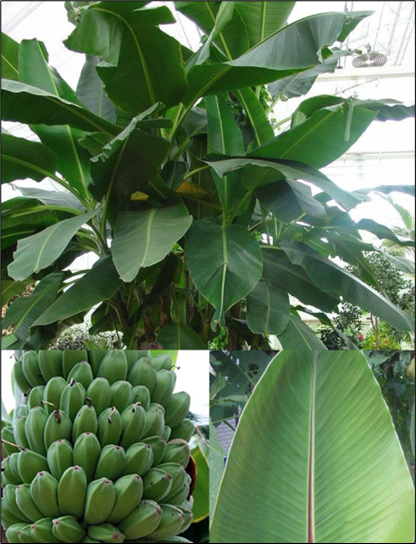
- The species Musa sikkimensis (scientific name) is commonly known as the Sikkim banana or Darjeeling banana and is native to the Eastern Himalayan region.
- The species possesses natural traits related to disease resistance and tolerance to environmental stress.
- The plant is not widely cultivated as an edible fruit crop but serves as an important genetic resource for banana breeding and crop improvement programmes.
- The species has reported medicinal properties and is used in traditional treatments for dysentery, ulcers, diabetes and microbial infections.
- The plant belongs to the genus Musa and is among the highest altitude banana species found in India and Bhutan.
- The plant is robust and grows up to about four metres in height with yellowish green foliage and a reddish-tinted pseudostem.
Essential Commodities Act 1955
Context: Recently, the Union Government invoked the Essential Commodities Act, 1955 to regulate natural gas supply and LPG production amid energy security concerns triggered by escalating tensions in West Asia.
More on the News
- The decision was taken amid rising energy security concerns following the West Asia crisis triggered by military strikes involving Israel, the United States and Iran.
- The order was issued by the Ministry of Petroleum and Natural Gas and came into force with immediate effect.
- The government directed oil refining companies to maximise production of Liquefied Petroleum Gas and ensure adequate supply for domestic consumers.
Government Measures to Regulate Natural Gas Supply
- The government directed that natural gas supply should be prioritised for essential sectors to maintain energy security and supply stability.
- The priority sectors include domestic piped natural gas supply and compressed natural gas used in the transport sector.
- The priority list also includes the production of liquefied petroleum gas and the operational requirements of natural gas pipelines.
- The supply to these priority sectors will be maintained at one hundred percent of their past six-month average gas consumption, subject to operational availability.
- Fertiliser plants will receive seventy percent of their past six-month average gas consumption under the new order.
- The government directed public sector oil marketing companies to prioritise LPG production for domestic consumption.
- The companies identified in the order include Indian Oil Corporation, Hindustan Petroleum Corporation Limited and Bharat Petroleum Corporation Limited.
- These companies supply cooking gas to nearly ninety nine percent of domestic households in India.
About the Essential Commodities Act 1955
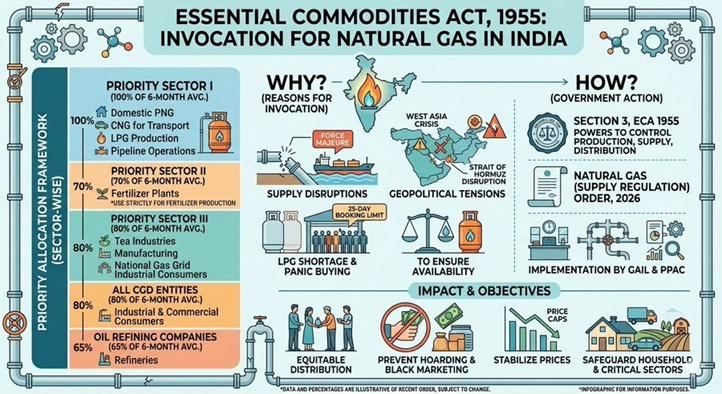
- The Essential Commodities Act, 1955 empowers the government to regulate production, supply and distribution of essential commodities in the national interest.
- The Act is used to prevent hoarding, control prices and ensure the availability of essential goods to consumers.
- In 2020, the Act was amended to limit government powers to regulate certain agricultural commodities except under extraordinary circumstances.
- These circumstances include war, famine, extraordinary price rise and natural calamities of severe nature.
Ho Mobile Dictionary Application
Context: Recently, a self-taught developer, Krishna Diggi from the Ho tribal community, launched a new version of the Ho mobile Dictionary app with more than 10,000 words to support the preservation of the Ho language.
More on the News
- The developer Krishna Diggi belongs to the Kolhan region of Jharkhand and started the project in 2017 with the aim of protecting indigenous linguistic heritage.
- The application has been developed under a small IT services startup called Ipil Innovation.
- The initiative seeks to ensure that the Ho language remains relevant in an increasingly digital world.
Digital Dictionary for Language Preservation
- The digital dictionary was initially developed as a desktop software before being converted into a mobile application due to increasing smartphone usage.
- The first mobile version of the application was released on the Google Play Store in 2021.
- The application functions as a trilingual dictionary that allows users to search words in English, Hindi and Ho languages.
- The application provides translations, example sentences and words written in the Warang Chiti script.
About the Ho Language
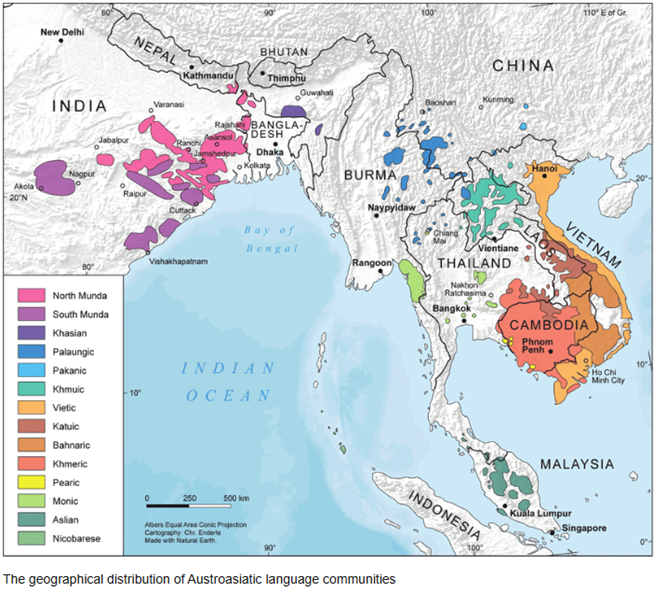
- The Ho language belongs to the Austroasiatic language family and forms part of the Munda branch, which also includes Santhali.
- The language is closely related to the Mundari language and is primarily spoken in the Kolhan region of Jharkhand, with additional speakers in parts of Odisha and West Bengal.
- The Ho or Kolha people are an Austroasiatic Munda ethnic group of India. They call themselves the Ho, Hodoko and Horo, which mean ‘human’ in their own language.
- According to the Census of India 2011, the Ho language has over 1.42 million speakers, with the majority residing in Jharkhand.
Warang Chiti Script
- The Ho language is written using the Warang Chiti script, which was developed specifically for writing the language.
- The script received international digital recognition after being included in the Unicode Standard Version 7.0 in 2014 by the Unicode Consortium.
- Inclusion in the Unicode Standard enables the script to be used in computers, smartphones and other digital platforms, thereby supporting the digital preservation of the Ho language.
Revised Guidelines on Look Out Circulars
Context: Recently, the Ministry of Home Affairs (MHA) revised guidelines on Look Out Circulars to restrict their issuance to authorised law enforcement agencies and prevent misuse by statutory bodies lacking criminal jurisdiction.
Key Changes in the Guidelines
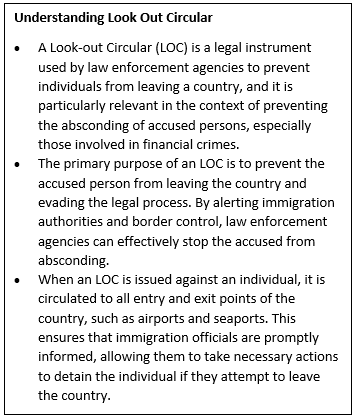
- The Ministry of Home Affairs issued revised guidelines clarifying the procedure for issuing Look Out Circulars in India.
- The guidelines state that statutory bodies without criminal investigative powers cannot directly request the Bureau of Immigration to issue Look Out Circulars.
- The decision aims to ensure that Look Out Circulars are issued only through proper legal procedures and supported by valid documentation.
- These bodies must forward their requests to an authorised law enforcement agency which will examine the case and submit the request to the Bureau of Immigration.
- If the Bureau of Immigration receives such requests directly from unauthorised bodies it must return the request and advise them to approach the concerned law enforcement agency.
- The guidelines explicitly name the following entities as being restricted from issuing direct LOC requests to the Bureau of Immigration (BoI):
- National Commission for Women (NCW)
- National Human Rights Commission (NHRC)
- National Commission for Protection of Child Rights (NCPCR)
- National Company Law Tribunal (NCLT)
- Any other tribunal that does not have criminal jurisdiction.
Standardisation of Look Out Circular Categories
- The revised guidelines introduce three standardised action categories in the Look Out Circular proforma.
- The first category directs authorities to detain the individual and inform the originating agency.
- The second category requires immigration authorities to prevent the departure of the individual and inform the originating agency.
- The third category requires officers to refer to remarks for further action depending on the circumstances.
National Highways Green Cover Index Annual Report 2025–26
Context: The National Highways Authority of India has released the first National Highways Green Cover Index Annual Report 2025–26 to quantitatively assess plantation and green cover along India’s national highways.
More on the News
- The report was prepared in collaboration with the National Remote Sensing Centre of the Indian Space Research Organisation.
- The initiative uses space-based technologies to provide a scientific and quantitative assessment of vegetation within the Right of Way of national highways.
- The first assessment covered about 30,000 kilometres of national highways across 24 states during the period July to December 2024.
- The initiative is part of a three-year Memorandum of Understanding signed in January 2024 between NHAI and the National Remote Sensing Centre.
- National Highways Authority of India (NHAI) was set up by an act of the Parliament, NHAI Act, 1988 “An Act to provide for the constitution of an Authority for the development, maintenance and management of national highways and for matter connected therewith or incidental thereto”
- The index will be updated annually to monitor improvements in plantation and green cover along highways.
Green Cover Index
- The Green Cover Index is a metric that measures the percentage of land covered by vegetation within the Right of Way of national highways.
- The index is derived from satellite-based analysis of vegetation by detecting chlorophyll content and vegetation reflectance patterns.
- Healthy vegetation reflects near infrared radiation differently from barren or stressed land which enables accurate identification of green cover.
- The index is calculated for every one-kilometre segment of the national highway network to provide a granular assessment of plantation coverage.
- This technology driven method replaces manual tree counting and provides a more objective and scalable assessment of highway green cover.
- Assam (53.16%) has the highest green cover along national highways followed by Gujarat (46.91%), Telangana (43.57%), Bihar (42.77%) and Tamil Nadu (42.38%) as per the National Highways – Green Cover Index.
Key Pillars of the NH-GCI Framework
- Satellite-Based NDVI Assessment: Applying Normalised Difference Vegetation Index (NDVI) thresholds to high-resolution imagery to distinguish green cover from other land types.
- 1 km Segmented Reporting: Categorising every kilometre of the national network into four classes—Poor, Moderate, Good, and Very Good—for granular spatial monitoring.
- Mobile-Based Field Validation: Using a dedicated app for ground-truth verification, capturing field photographs at 4-5 locations on either side of the highway to match satellite data.
- Web GIS Integration (Bhuvan): Providing a centralised platform for data visualisation, reporting, and real-time monitoring of plantation performance.
- Biannual Change Detection: Monitoring vegetation twice a year to track the survival of saplings and the growth of mature canopies across diverse climatic zones.
- State-Wise Benchmarking: Generating cumulative GCI values (e.g., Uttarakhand at 39.78, West Bengal at 41.32) to foster competition and accountability among regional highway units.
Golestan Palace
Context: The UNESCO World Heritage site Golestan Palace in Tehran suffered damage to its historic structures following shockwaves from recent airstrikes that struck nearby Arag Square in central Tehran.
More on the News
- The strike occurred within the UNESCO-designated buffer zone of the heritage complex, which is intended to protect the site from potential threats.
- The explosions caused serious damage to decorative architectural features such as wooden doors, windows and traditional Orosi latticework.
- Orosi (or Orsi) refers to a traditional Persian sash window characterised by intricate wooden latticework and vibrant stained glass.
- UNESCO issued formal statements reminding all parties of their obligations under the 1954 Hague Convention and the 1972 World Heritage Convention, which mandate the protection of cultural property during armed conflict.
About Golestan Palace
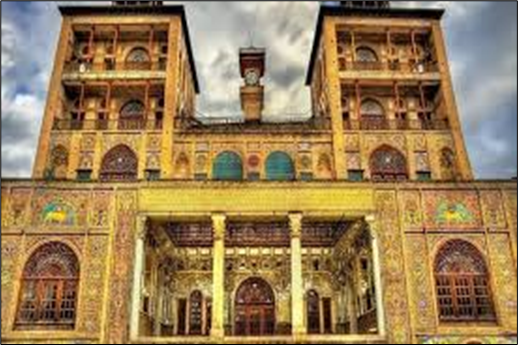
- The Golestan Palace is a historic royal complex located in the capital city of Tehran in Iran.
- The palace complex originated during the Safavid Dynasty and was significantly expanded under the Qajar Dynasty.
- The complex served as the official residence and ceremonial centre for several Persian monarchs including the last rulers of the Qajar period.
- The palace displays a blend of traditional Persian architecture and nineteenth-century European artistic influences.
- The cultural significance of the site led to its inscription as a World Heritage Site by UNESCO in 2013.
Importance of Golestan Palace for India
- The palace houses the historic Muraqqa-e Gulshan also known as the Gulshan Album, which contains rare paintings, calligraphy and illustrations from the Mughal period.
- The album was originally compiled for the Mughal emperor Shah Jahan in the seventeenth century.
- The collection includes artworks produced during the reign of the Mughal emperor Jahangir and contains works of famous Mughal court artists.
- The album represents a fusion of Persian, Mughal, Deccani, Turkish and European artistic traditions.
- The protection of the palace and its collections is therefore important for preserving historical links between Indian and Persian cultural traditions.
Exercise Lamitiye 2026
Context: The Indian Armed Forces contingent arrived in Seychelles to participate in the eleventh edition of Joint Military Exercise LAMITIYE 2026.
More on the News
- The exercise is being conducted at the Seychelles Defence Academy from 9 March to 20 March 2026.
- The Indian contingent includes personnel from the Assam Regiment, along with participation from the Indian Navy and the Indian Air Force.
- The current edition marks an important milestone because all three services of the Indian Armed Forces are participating together in the exercise.
- The exercise will focus on enhancing synergy in sub-conventional operations in semi-urban environments and strengthening cooperation during peacekeeping operations.
- The participating forces will conduct joint planning training and execution of tactical drills to neutralise potential threats in semi urban settings.
- The exercise will conclude with a two-day validation exercise to assess the operational readiness and coordination of both forces.
About Exercise LAMITIYE
- Exercise LAMITIYE is a bilateral joint military exercise between India and Seychelles.
- The exercise was first conducted in 2001 and is organised biennially in Seychelles.
- The exercise contributes to strengthening defence relations between India and Seychelles and supports maritime and regional security in the western Indian Ocean region.