
SYLLABUS
GS-3: Indian Economy and issues relating to Planning, Mobilization of Resources, Growth, Development and Employment.
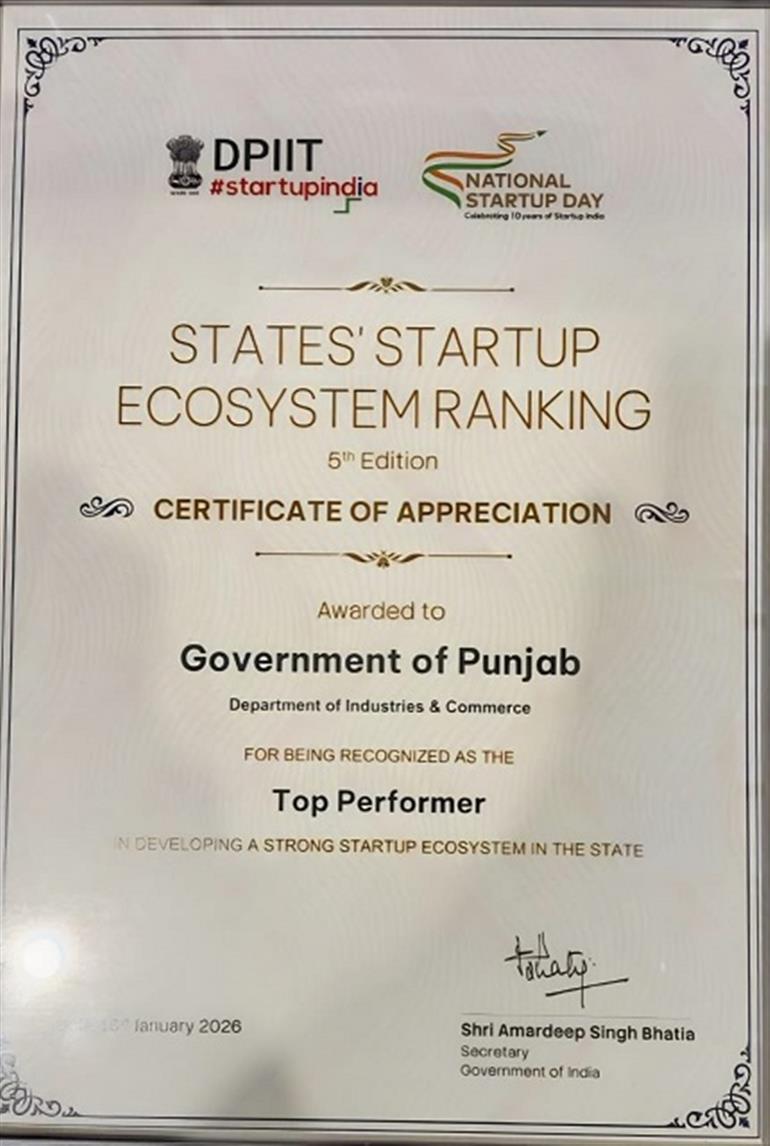
Context: The 5th edition of the State Ranking Framework (SRF 5.0) released by DPIIT presents a comprehensive overview of India’s startup ecosystem, and the broader impact on entrepreneurship development across the country.
More on the News:
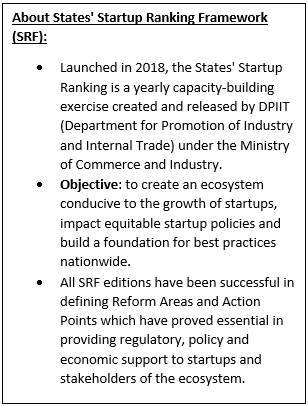
- In addition, the framework places greater emphasis on incubation infrastructure through a dedicated reform area and specific action points.
- The consideration period for this exercise was between 1st January 2023 to 30th November 2024.
Key highlights of the report
- Private players’ inclusion: SRF 5.0 incorporates Private Ecosystem Mapping to evaluate the growth of startup ecosystems led by private stakeholders beyond government interventions.
- Priority sector focus: It emphasizes on priority sectors for States and Union Territories to identify and strengthen focus sectors.
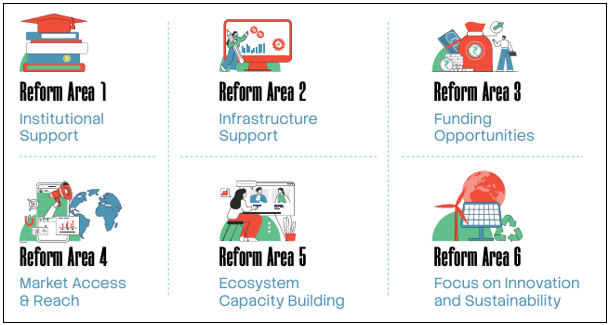
- Reform areas: The documentary evaluation process centres around 6 reform areas, which have been further divided into 19 different action points.
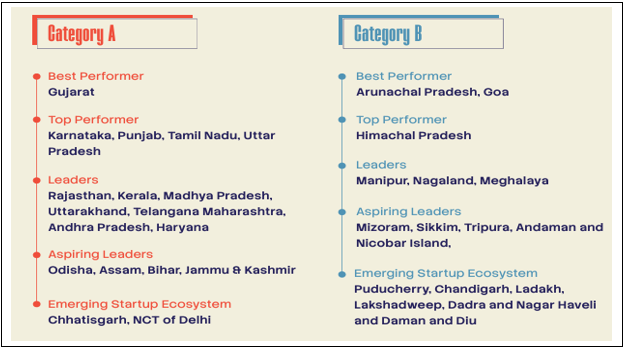
- Ranking: The States and UTs were divided into two categories:
- Category A has been further divided into two sub-categories, namely A1 and A2,
- Category A1 includes all States/UTs with a population of more than 5 crores
- Category A2 includes all States/UTs with a population of more than 1 crore and less than 5 crores.
- Category B includes all States/UTs with a population of less than 1 crore.
- Category A has been further divided into two sub-categories, namely A1 and A2,
Significance of the Report
- Cooperative and competitive federalism: SRF has encouraged States and UTs to adopt dedicated startup policies and tracks their evolution through annual rankings, echoing the national commitment to Sabka Saath, Sabka Vikas.
- Entrepreneurial ecosystem: It complements the efforts of both the Central (Startup India) and the States/UTs government to strengthen entrepreneurial mindsets across the country.
- Capacity-building: It has an outcome-oriented feedback mechanism, through which beneficiary startups and incubators across States/UTs share their experiences of government support and handholding.
- Peer learning: It serves as a tool for learning and replication through best practices and benchmarking.