
SYLLABUS
GS-1: Indian Culture – Salient aspects of Art Forms, Literature and Architecture from ancient to modern times.
Context: Recent archaeological excavations at Zehanpora in North Kashmir have revealed Kushan-era Buddhist structures, highlighting Kashmir’s role as an early centre of Buddhism and transregional trade.
More on the News
- The findings are based on expert explanations by Dr Mohamad Ajmal Shah, the director of the archaeological excavation at Zehanpora.
- The discovery was highlighted nationally after the Prime Minister mentioned the site in his Mann ki Baat address.
Key Findings from the Zehanpora Excavation
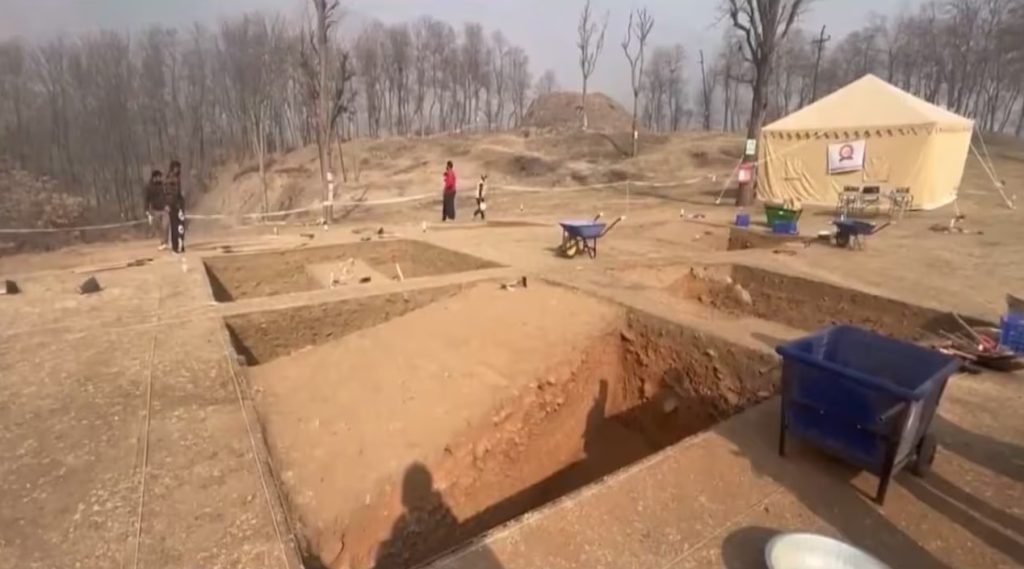
- The site is spread over nearly ten acres in the Baramulla district and consists of large man-made mounds.
- The structures date back to the Kushan period and are estimated to be over two thousand years old.
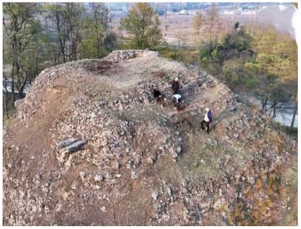
- The mounds resemble the structural form of Buddhist stupas and appear as a raised man-made plateau.
- Evidence suggests the presence of a wooden superstructure above the mounds in the past.
- A canal constructed in the 1970s divided the site and contributed to partial degradation.
Link with Global Archives
- A photograph of the site was discovered in a museum archive in France during a research fellowship in 2023.
- The image is believed to have been taken by British travellers passing through Taxila and Kashmir, which showed three Buddha stupas that closely matched the Zehanpora mounds.
- This connection highlights the global documentation of Kashmir’s cultural heritage.
Buddhism in Kashmir
- Buddhism is believed to have existed in Kashmir even before the reign of Emperor Ashoka.
- Kalhana’s Rajatarangini mentions the early presence of Buddhism in the region.
- The Mahavamsa records that Ashoka invited Buddhist scholars from Kashmir to the Buddhist council at Pataliputra.
- Patronage by Kushan rulers, especially Kanishka, strengthened Buddhism in Kashmir.
Role of Kashmir in Buddhist Evolution
- Kashmir emerged as a major centre of Buddhist philosophy and learning.
- Monasteries, viharas and stupas were constructed across the region.
- The Mahayana sect of Buddhism is believed to have taken root in Kashmir.
- Buddhist monks from Kashmir carried Mahayana Buddhism to Central Asia and China.

Source :
Indian Express
TOI