
SYLLABUS
GS-2: Bilateral, Regional and Global Groupings and Agreements involving India and/or affecting India’s interests.
GS-3: Indian Economy and issues relating to Planning, Mobilization of Resources, Growth, Development and Employment.
Context: India faced double-pressure over energy from U.S. President Donald Trump’s decisions to “greenlit” the Russia Sanctions Bill mandating up to “500% tariffs” on countries buying Russian oil, and to withdraw the U.S. from the India-led International Solar Alliance (ISA) amongst dozens of other international organisations.
More on the News:
- The Russia Sanctions Act, a bipartisan Bill introduced in the US Senate, has so far got 84 co-sponsors (out of a total of 100 Senate members), and 151 co-sponsors in the U.S. House of Representatives, suggesting it will be passed smoothly once brought to a vote.
- The announcements came just ahead of the arrival of U.S. Ambassador-designate Sergio Gor to Delhi this weekend, who said in September that ensuring India ends its import of Russian oil is a “top priority”.
- Mr. Gor will begin his tenure in Delhi as Ambassador to Delhi and “Special envoy to South and Central Asia” on January 12, 2026.
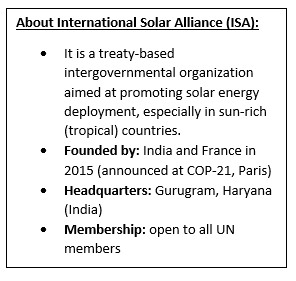
- As a part of a broader policy “to safeguard U.S. interests”, the United States has withdrawn from dozens of international organisations, including the India-France-led ISA.
- The U.S. joined the ISA in 2021.
Key provisions of the Russia Sanctions Bill:
- Tariff Deterrence: The bill allows the US to raise tariffs on all goods and services from a country to at least 500 % of their value, if found engaged in the exchange of Russian petroleum products.
- Waiver: Provision to allow the President to waive the tariffs for up to 180 days if it serves U.S. national interests.
Potential Implications of these steps on India:
- Russian Oil Embargo: Indian PSUs (Public Sector Undertakings), Reliance, Nayara Energy, and other big importers under sanctions from Western countries will reduce Russian oil imports, impacting India’s Energy Security.
- In 2018, under similar pressure from the previous Trump administration, India had “zeroed out” its oil imports from two key suppliers Iran and Venezuela as well.
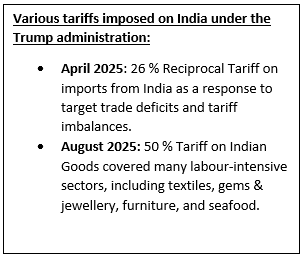
- Trade Impact: A tariff climb to 500 % on exports to the U.S. will reduce India’s Trade competitiveness, which could effectively shut Indian exports to the world’s largest economy.
- Bilateral Relation: This legislative push, paired with withdrawal from ISA and other bodies, signals growing friction in the bilateral relationship, despite cooperation in defence and technology.
- Major blow to multilateralism: US withdrawal from major climate treaties derails the global missions for increasing renewable energy and countering climate change efforts.
- Violation of Core WTO Principles: Unilateral sanctions undermine World Trade Organization (WTO) principles of non-discrimination and predictability and weaken the multilateral trading system by replacing rule-based trade with power-based coercion.