
SYLLABUS
GS-2: Issues relating to development and management of Social Sector/Services relating to Health.
Context: Recently, at the IMA NATCON 2025 in Shela, Ahmedabad, the Union Home Minister highlighted that India has achieved a 97 percent reduction in malaria cases and is close to eliminating the disease.
Key highlights of the Address
- He noted that mortality due to dengue has been reduced to about one percent.
- He highlighted a 25 percent reduction in maternal mortality in recent years.
- He attributed these outcomes to the effective implementation of flagship health schemes such as Ayushman Bharat and Mission Indradhanush.
- He pointed out that the Union health budget has increased from ₹37,000 crore in 2014 to ₹1.28 lakh crore at present.
- He underlined the need for doctors to align their efforts with expanded health infrastructure and public programmes.
About Malaria
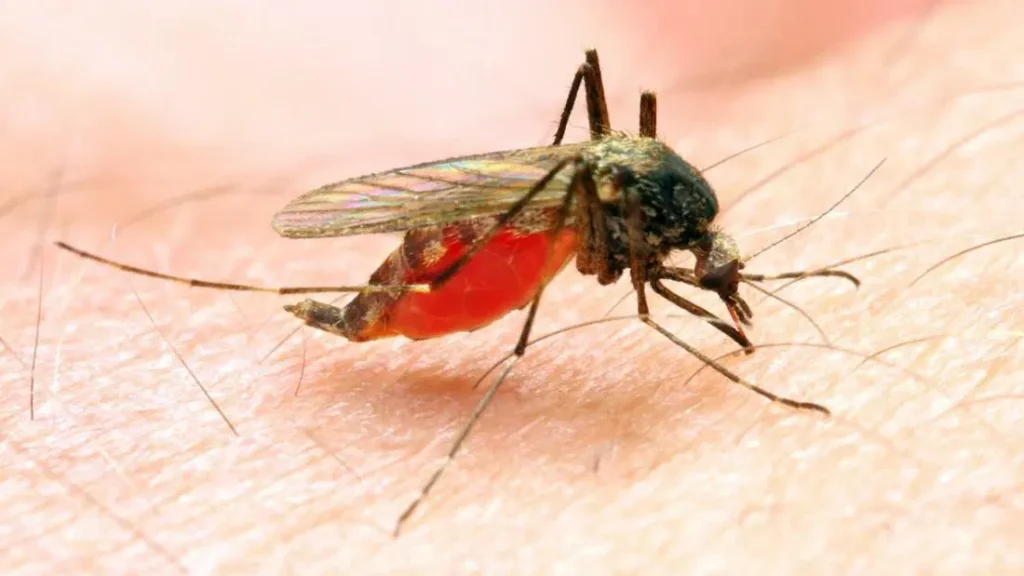
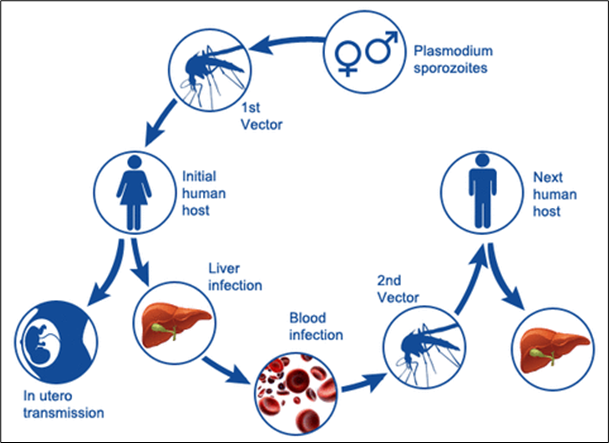
- Malaria is an acute febrile illness caused by Plasmodium parasites and is transmitted to humans through the bites of infected female Anopheles mosquitoes. It is both preventable and curable.
- The incubation period is usually 10 to 15 days after the infective mosquito bite. Common early symptoms include fever, headache and chills, which may be mild and therefore difficult to recognise, especially in the initial stages.
- In malaria-endemic regions, repeated exposure can lead to partial immunity. As a result, some individuals may carry the parasite without showing symptoms, leading to asymptomatic infections that contribute to continued transmission.
- Malaria is a treatable disease. Artemisinin-based Combination Therapies (ACTs) are currently the most effective antimalarial medicines and form the backbone of treatment for Plasmodium falciparum, the deadliest malaria parasite worldwide.
- World Malaria Day is observed globally on 25th April each year, following its institution by the World Health Organisation’s (WHO) member states during the 2007 World Health Assembly.
- In terms of global elimination efforts, Georgia was officially certified malaria-free by the World Health Organization in 2025, following similar certifications granted to Egypt and Cabo Verde in 2024.
- According to the World Malaria Report, the estimated number of malaria deaths stood at 5 lakhs 97 thousand in 2023, compared to 6 lakhs in 2022.
India’s Initiative for Malaria Elimination
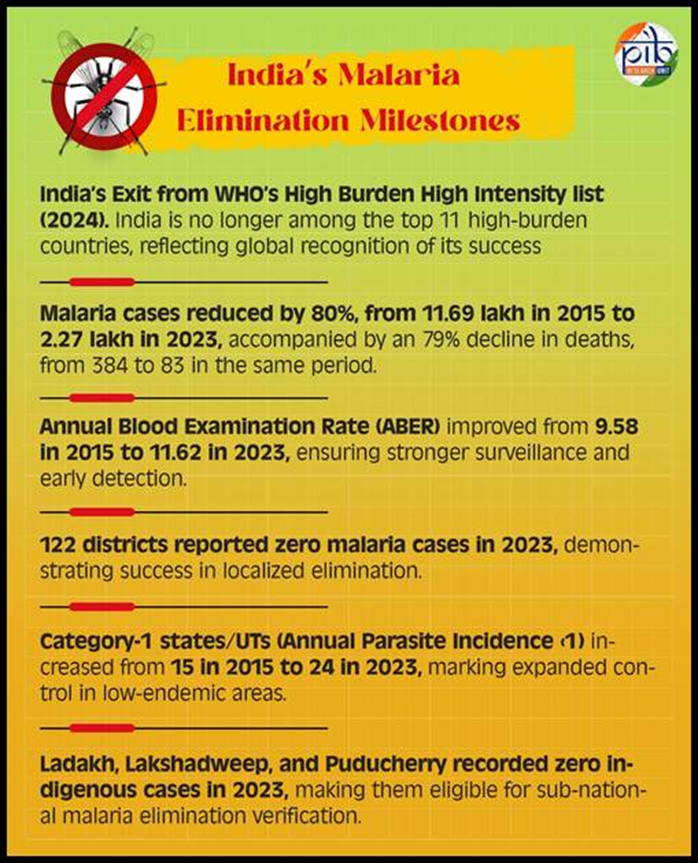
- India remains steadfast in its commitment to eliminate malaria by 2030, with the intermediate target of zero indigenous cases by 2027. The strategic roadmap for this mission is guided by:
- The National Framework for Malaria Elimination in India(2016-2030) outlines the vision, goals, and targets for phased malaria elimination.
- India also launched National Strategic Plan for Malaria Elimination (2023–2027) builds upon earlier frameworks and aligns with the WHO Global Technical Strategy for Malaria 2016–2030.
- National Vector Borne Disease Control Programme (NVBDCP): It is a centrally sponsored programme, aimed at prevention and control of vector-borne diseases through an integrated and cost-effective approach and implemented under the National Health Mission (NHM).
- Intensified Malaria Elimination Project-3 (IMEP-3): targets 159 high-burden districts across 12 states, focusing on malaria-prone and vulnerable populations to accelerate elimination efforts.
- WHO’s High Burden to High Impact (HBHI) group: India officially exited from the list of “High Burden to High Impact” countries in 2024.
Source:
WHO
The Hindu
Early Times