

SYLLABUS
GS-3:Challenges to internal security through communication networks, role of media and social networking sites in internal security challenges.
Context: On the occasion of National Consumer Day 2025, held at Bharat Mandapam, New Delhi, the Union Minister for Consumer Affairs, Food & Public Distribution released IS 19445:2025 – Bomb Disposal Systems — Performance Evaluation and Requirements, an Indian Standard aimed at strengthening safety and standardisation in bomb disposal operations.
More on the News
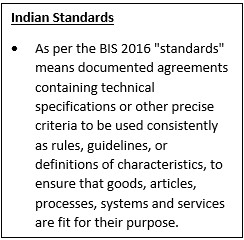
- The standard focuses on performance evaluation and operational requirements of bomb disposal equipment.
- The initiative was undertaken by the Bureau of Indian Standards to strengthen public safety and national security.
- IS 19445:2025 has been developed through a consensus-based process under the Arms and Ammunition for Civilian Use Sectional Committee (PGD 28). For this purpose, the Bomb Disposal Systems Panel (PGD 28/P1) was constituted under the convenorship of TBRL, DRDO.
- While developing IS 19445:2025, due consideration was given to international best practices and globally accepted performance concepts, suitably adapted to Indian threat scenarios and operating environments.
Need for the Standard
- The formulation of IS 19445:2025 was initiated following a request from the Ministry of Home Affairs and the Terminal Ballistic Research Laboratory (TBRL), DRDO, in view of the following factors:
- Increasing deployment of bomb disposal systems across security and civilian agencies
- Absence of a dedicated Indian Standard for performance evaluation of such systems
- Limited access to international standards and their partial misalignment with Indian threat profiles, munitions, and operational conditions
Key Provisions of IS 19445:2025
- The standard provides a comprehensive framework for evaluating bomb disposal systems, particularly with respect to blast loads and splinter effects. It specifies:
- Requirements for test equipment and test range conditions
- Evaluation procedures to objectively assess system performance
- Defined test methodologies, apparatus, test specimens, and acceptance criteria
- The standard is expected to provide the following benefits:
- Clearly defined and objective performance evaluation criteria
- Enhanced safety of operators, first responders, and bystanders
- A transparent and uniform basis for procurement, testing, and certification
- Support for indigenous development and innovation under Make in India
- Improved reliability and interoperability of equipment across agencies
Bureau of Indian Standards (BIS)
- Indian Standards Institution (ISI) was established in 1947 and registered under the Societies Registration Act, 1860 later ISI was renamed as Bureau of Indian Standards (BIS).
- Indian Standards Institution started operating the Certification Marks Scheme under the Indian Standards Institution (Certification Marks) Act, 1952.
- The Scheme formally launched by ISI in 1955-56, enabled it to grant licenses to manufacturers producing goods in conformity with Indian Standards and to apply the ISI Mark on their products.
- BIS allot the ISI mark to any product as a third-party guarantee after ensuring its quality, reliability and safety.
- The formulation of standards and other related work were not governed by any legislation. A Bill with this objective was therefore introduced in the Parliament in 1986.
- The Bureau of Indian Standards (BIS) came into existence under the BIS Act, 1986. The standards established by the Bureau shall be the Indian Standard
Source:
Economic Times
PIB