
SYLLABUS
GS-1: Important Geophysical Phenomena such as earthquakes, Tsunami, Volcanic activity, cyclone etc.
GS-3: Disaster and Disaster Management.
Context: Forecasts indicate that an El Niño event will likely emerge in 2026, potentially altering weather patterns across continents and influencing everything from droughts to storms.
Key findings from Forecast data:
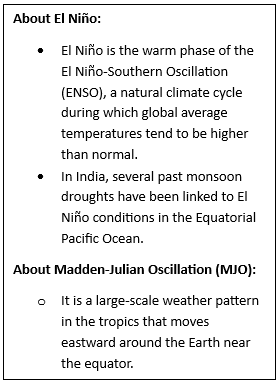
- Renewed El Niño: The equatorial Pacific Ocean is showing early signs of a possible return of El Niño conditions, which could begin in the second half of 2026 and peak during the northern hemisphere winter.
- Drivers Behind the Pacific Flip: Combined efforts of Westerly wind bursts that pushed warm water eastward and an active Madden-Julian Oscillation has contributed to weakening trade winds that sustain La Niña.
- Weather Ripples:
- In North America, El Niño typically brings wetter conditions to the southern regions while drying out the north.
- India witness risk of weaker monsoons and droughts.
- South America faces the risk of floods.
- Contribute to global heat: Such a development could mean another year at or close to the 1.5°C warming threshold above pre-industrial levels, alongside a heightened risk of more frequent and intense heatwaves, droughts, wildfires and other associated impacts of intense planetary and regional warming.
- Ocean temperature anomalies: a potential El Niño are emerging beneath the ocean surface where a large warm pool in the west, at around 100-250 metres depth (300-800 feet) are expanding.
Significance of the Findings:
- Climate Scientists warn that a renewed El Niño could reinforce the current upward trend in global temperatures.
- El Niño developments often leads to broader atmospheric changes, affecting trade winds and global circulation.
- The interconnected changes underscore El Niño’s role in amplifying climate variability and cascading effects on ecosystems and economies.