
SYLLABUS
GS-2: Important International institutions, agencies and fora – their Structure, Mandate.
GS-3: Conservation, environmental pollution and degradation, environmental impact assessment.
Context: Recently, India’s resolution on ‘Strengthening the Global Management of Wildfires’ was adopted at the 7th Session of the United Nations Environment Assembly (UNEA-7) in Nairobi, Kenya.
More on the News
- The resolution was adopted with wide support from UN Member States, indicating a broad international consensus on the urgency of addressing wildfire risks.
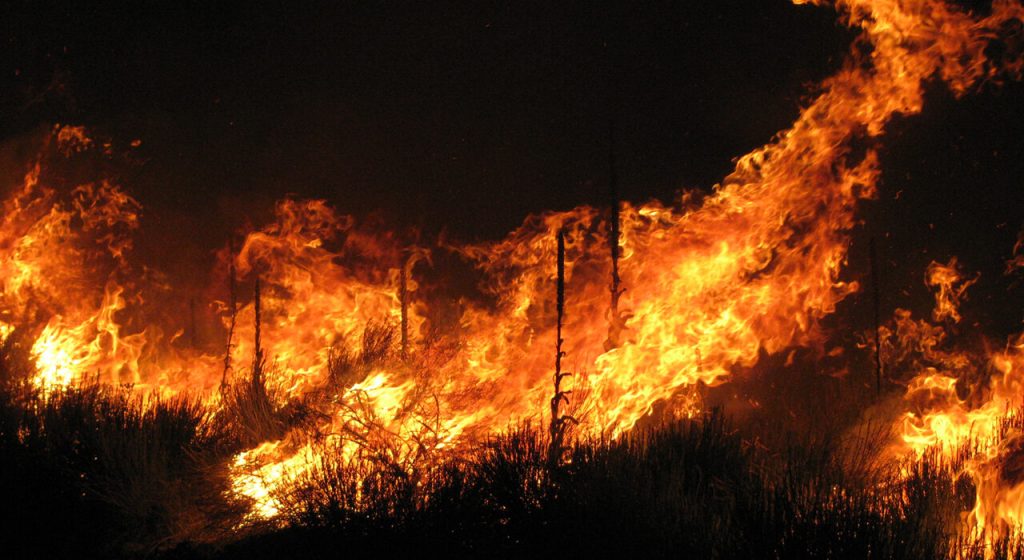
- India highlighted that wildfires have evolved from seasonal events into frequent and prolonged disasters due to climate change, rising temperatures, prolonged droughts and human activities.
- The core objective of the resolution is to strengthen international cooperation, coordinated action and shared responsibility in preventing and managing wildfires globally.
- India drew attention to UNEP’s global report ‘Spreading Like Wildfire’, which warns that wildfires may rise by 14% by 2030, 30% by 2050 and 50% by 2100, if current trends continue.
Key Provisions of India’s Resolution
The resolution aims to reinforce ongoing global activities under the Global Fire Management Hub and calls for:
- Strengthened International Cooperation: Development of early warning systems, risk assessment tools, and satellite- and ground-based ecosystem monitoring, besides promotion of community-based alert mechanisms.
- Enhanced Regional and Global Collaboration: Mechanisms supporting prevention, post-response recovery, and ecosystem restoration.
- Knowledge Sharing and Capacity Building: Creation of platforms for best practices, along with training and capacity-building programmes for stakeholders.
- Support for National and Regional Action Plans: Assistance to Member States in developing and implementing integrated fire management and wildfire resilience strategies.
- Facilitating Access to International Finance: Support to Member States in preparation of project proposals to access funding through multilateral mechanisms and results-based schemes.
About the United Nations Environment Programme (UNEP)
- It is the UN’s leading environmental authority, setting the global agenda, promoting sustainable development, and advocating for environmental protection worldwide.
- It was founded in 1972 as an outcome of the United Nations Conference on the Human Environment (Stockholm Conference, 1972), the first major global conference on environmental issues.
- It unites 193 Member States to find solutions to climate change, nature and biodiversity loss, and pollution and waste, collectively known as the triple planetary crisis.
- UN Environment Assembly (UNEA) is UNEP’s highest decision-making body, and it convenes every two years.
- UNEP releases key assessments such as the Emissions Gap Report, Global Environment Outlook, and Adaptation Gap Report.
- It is headquartered in Nairobi, Kenya.
About the United Nations Environment Assembly (UNEA-7)
- It is the seventh session of the world’s highest-level decision-making body on environmental issues.
- The first such session was held in 2014 in Nairobi, Kenya.
- The overarching theme for UNEA-7 is “Advancing sustainable solutions for a resilient planet”.
Source:
UNEP Org
PIB
News On Air