
SYLLABUS
GS-1: Modern Indian history from about the middle of the eighteenth century until the present- significant events, personalities, issues.
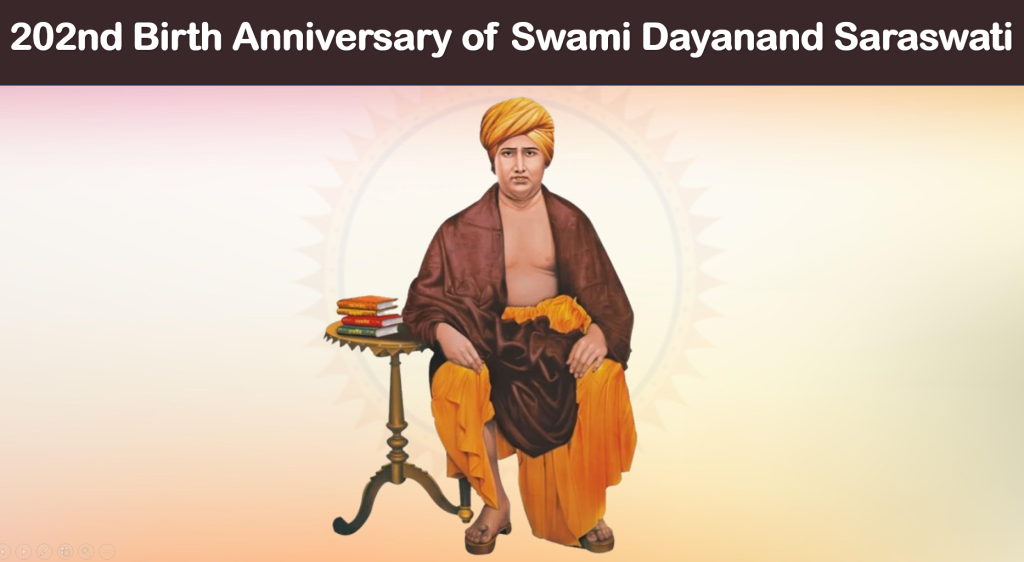
Context: India commemorated the 202nd birth anniversary of Swami Dayanand Saraswati on 12 February, recalling his contributions to social reform, education and national awakening.
More on the News
- The Prime Minister of India paid heartfelt tributes to Swami Dayanand Saraswati on his 202nd birth anniversary.
- The contributions of Swami Dayanand through his work Satyarth Prakash were highlighted as instrumental in spreading Vedic values.
- The Prime Minister had earlier released commemorative coins marking his 200th birth anniversary and the 150th anniversary of the Arya Samaj.
About Swami Dayanand Saraswati
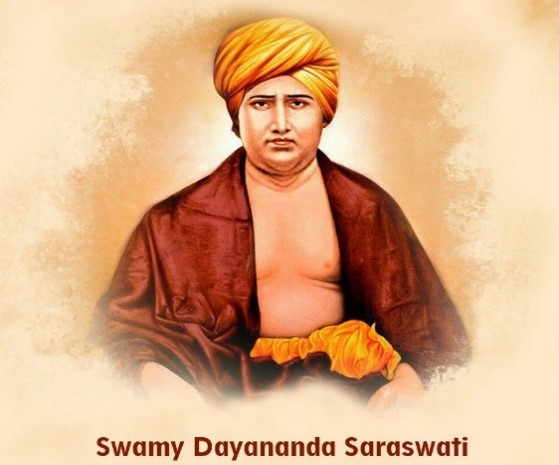
- Swami Dayanand Saraswati was born on 12 February 1824 at Tankara in present-day Gujarat in a Brahmin family.
- He became a disciple of Swami Virajananda at Mathura in 1860 and received rigorous training in Vedic scriptures and Sanskrit grammar.
- He began public preaching in the mid-1860s and advocated a return to the teachings of the Vedas.
- Swami Dayanand engaged in a major theological debate with orthodox scholars at Kashi in 1869.
- Swami Dayanand Saraswati passed away in 1883, leaving behind a powerful reformist legacy.
- Swami Dayanand Saraswati founded several critical organisations and institutions dedicated to social reform, Vedic education, and humanitarian service.
Institutions Founded or Inspired by Swami Dayanand Saraswati
- Arya Samaj: Founded on 10 April 1875 in Bombay to revive Vedic teachings and reform Hindu society by opposing superstition and caste discrimination.
- Paropkarini Sabha: Established in 1882 to publish and promote his works and Vedic literature.
- Vedic Gurukuls: Set up between 1869 and 1873 to impart traditional Vedic education as an alternative to colonial schooling.
- Dayanand Anglo-Vedic Institutions: Founded by his followers in 1886 to combine modern education with Vedic values.
Major Works and Texts of Swami Dayanand Saraswati
- Satyarth Prakash: His magnum opus explaining Vedic principles and critically examining other religions and sects.
- Rigvedadi Bhashya Bhumika: An introduction discussing the origin and eternal nature of the Vedas.
- Rigved Bhashyam and Yajurved Bhashyam: Commentaries on the Rig Veda and Yajur Veda. The Yajur Veda commentary was completed while the Rig Veda remained unfinished.
- Sanskarvidhi: A guide to the sixteen Vedic rites from birth to death.
- Panch Maha Yajya Vidhi: A text outlining the five daily Vedic duties prescribed for individuals.
Philosophy of Swami Dayanand Saraswati
- His philosophy is rooted in the concept of “Back to the Vedas”. He sought to strip away centuries of superstition to return to what he considered the pure, rational roots of Indian spirituality.
- The four key pillars of his philosophy are:
- Monotheism: He preached belief in one formless and eternal God and opposed idol worship. He held that God should be worshipped through prayer, meditation and righteous conduct.
- Supremacy of the Vedas: He regarded the four Vedas as infallible and the ultimate source of true knowledge and rejected later texts where they contradicted Vedic teachings.
- Karma and Reincarnation: He taught that the soul is eternal and distinct from God. He believed that individuals reap the results of their actions across births until attaining liberation.
- Social Equality and Merit: He opposed the hereditary caste system and argued that status should be based on qualities and actions. He supported women’s education and the removal of untouchability.
Source:
E Gyankosh
Bussiness standard