
SYLLABUS
GS-1: Important Geophysical Phenomena such as earthquakes, Tsunami, Volcanic activity, cyclone etc.
GS-3:Disaster and Disaster Management.
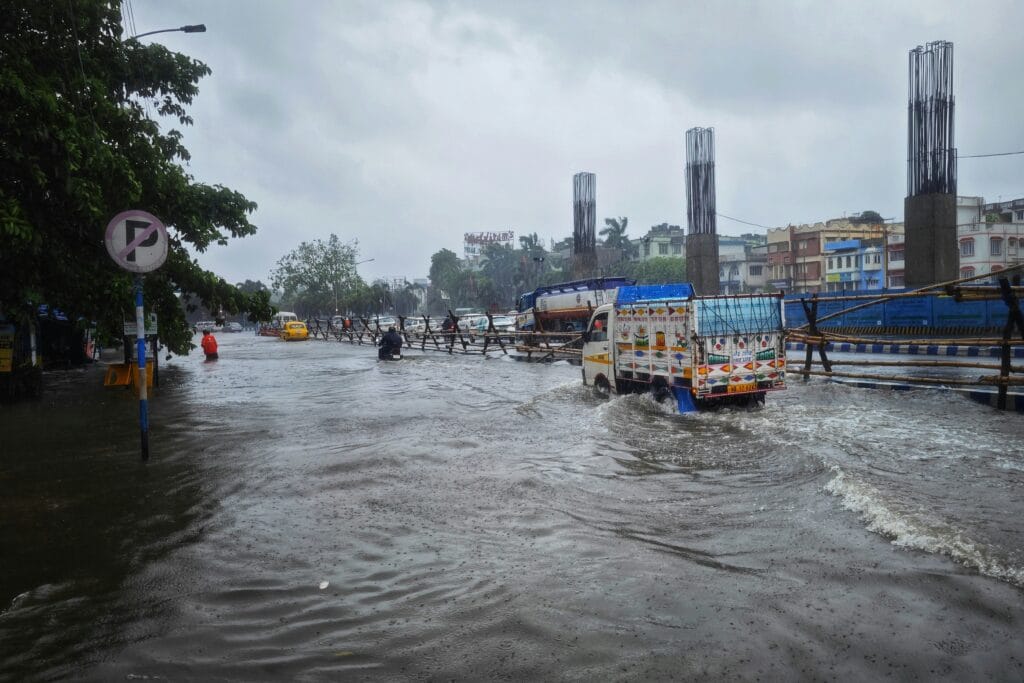
Context: From January to November 2025, 331 of 334 days were marked by a near-continuous cascade of floods, heatwaves and storms — claiming 4,419 lives and damaging 17.4 million hectares of crops, signalling a dangerous new climate normal in India.
Key findings:
- Growing intensity and persistence of climate impacts: India experienced extreme weather events on more than 99 per cent of days between January and November 2025.
- Range of extreme weather: The events ranged from heatwaves and coldwaves to lightning, storms, cyclones, cloudbursts, heavy rainfall, floods and landslides.
- Loss of People and Property: These events claimed at least 4,419 lives, affected around 17.4 million hectares of cropped land, destroyed at least 181,459 houses and killed approximately 77,189 animals.
- States face uneven toll:
- Himachal Pradesh recorded extreme weather on almost 80 per cent of days during the period.
- Andhra Pradesh reported the greatest number of deaths, at 608.
- Maharashtra saw the largest area of cropped land affected, at 8.4 million hectares.
- At a regional level, north-west India experienced the highest number of extreme weather days in 2025, with events recorded on 311 days.
- Series of broken climate records: January was India’s fifth driest since records began in 1901, while February was the warmest in 124 years.
- Daily extremes: While the country has faced at least one disaster a day in past three years, 2025 saw both the highest number of extreme weather days and the greatest overall loss and damage.
- Early arrival of Heatwaves: Goa and Maharashtra experienced India’s first heatwave of the year on 25 February — the first time a heatwave has been recorded during the January-February winter period as defined by the IMD. The IMD confirmed February 2025 as the hottest February on record.
- Growing severity of “non-monsoon” extremes: sharp escalation in lightning, storms, floods, landslides and heatwaves are increasing the death tolls.
- Uneven and erratic nature of Monsoon: By the end of the monsoon, 147 districts — about 20 per cent of the country’s 727 districts — had received deficient or largely deficient rainfall.
- Expansion in geographical spread: In 2024, November coldwaves were confined to Maharashtra and Rajasthan, however in 2025, coldwave conditions were reported in 13 states across all four regions of India.
Significance of the Findings:
- Increasing regularity pattern in extreme events particularly exposes vulnerable populations, who often lack the resources needed to recover from repeated shocks.
- The seasonal patterns indicate a collapse of clear seasonal boundaries, with year-round exposure to climate extremes and growing risks to lives, livelihoods, agriculture and the wider economy.
- The trends signal a widening ecological backlash and underscore the urgency of meaningful climate action.