
SYLLABUS
GS 3: Conservation, environmental pollution and degradation, environmental impact assessment.
Context: Recently, the 15th meeting of the Conference of the Parties (COP 15) to the Convention on Conservation of Migratory Species (CMS) of Wild Animals was concluded in Campo Grande, Brazil.
More on the News
• Expansion of Protected Species List:
- 40 new species of migratory birds, aquatic and terrestrial animals were added to the protected list category, which comes in the backdrop of new evidence “that many migratory species are moving closer to extinction”.
- It includes cheetah, striped hyena, snowy owl, giant otter, great hammerhead shark, and several shorebird species.
• The theme of the Conference was “Connecting Nature to Sustain Life”, highlighting the vital role of ecological connectivity for conserving ecosystems, which are crucial both for migratory species and human well-being.
• This is the first time CMS COP is hosted in Brazil, the world’s most biodiverse country.
• Migratory Species Champion Award: 9 new Champions were recognised for their contributions to long-term conservation initiatives:
- Government of Uzbekistan
- Government of Australia
- Government of the Principality of Monaco
- Government of Flanders
- French Biodiversity Agency
- National Centre for Wildlife of the Kingdom of Saudi Arabia
- European Commission
- German Federal Agency for Nature Conservation (BfN)
- Regional Organization for the Protection of the Marine Environment (ROPME)
About the Convention on the Conservation of Migratory Species (CMS)
• Signed in Bonn on 23 June 1979, the Convention, popularly known as the Bonn Convention, is an environmental treaty operating under the aegis of the United Nations Environment Programme.
• It provides a global platform for conservation and sustainable use of migratory animals and their habitats.
• Unique Feature: It is the only UN-based intergovernmental treaty exclusively dedicated to the conservation and management of terrestrial, aquatic, and avian migratory species across their entire range.
• Core Objective: Parties recognise the need to protect migratory species, especially those with an unfavourable conservation status.
• Institutional Mechanism: The Conference of the Parties (COP) serves as the principal decision-making body of the Convention. It meets once every 3 years and sets the budget and priorities of the following three years.
• Parties: 133 Parties (132 countries, plus the European Union).
- Jamaica signed the original Convention but has yet to ratify it, so it is not a Party.
• Implementation Instruments: CMS operates through a range from legally binding treaties (called Agreements) to less formal instruments, such as Memoranda of Understanding.
• Appendices under CMS:
- Appendix I – Endangered Migratory Species: It includes migratory species classified as Extinct in the Wild, Critically Endangered, or Endangered as per the IUCN Red List of Threatened Species, and promotes strict protection along with transboundary conservation efforts.
- Appendix II – Species with Unfavourable Status: It includes migratory species with unfavourable conservation status, covering those from Near Threatened to Extinct in the Wild as per the IUCN Red List of Threatened Species, and promotes international cooperation through conservation agreements.
- The total number of unique species across both appendices now exceeds 1,200.
India and CMS COP
• India has been a signatory to CMS since 1983.
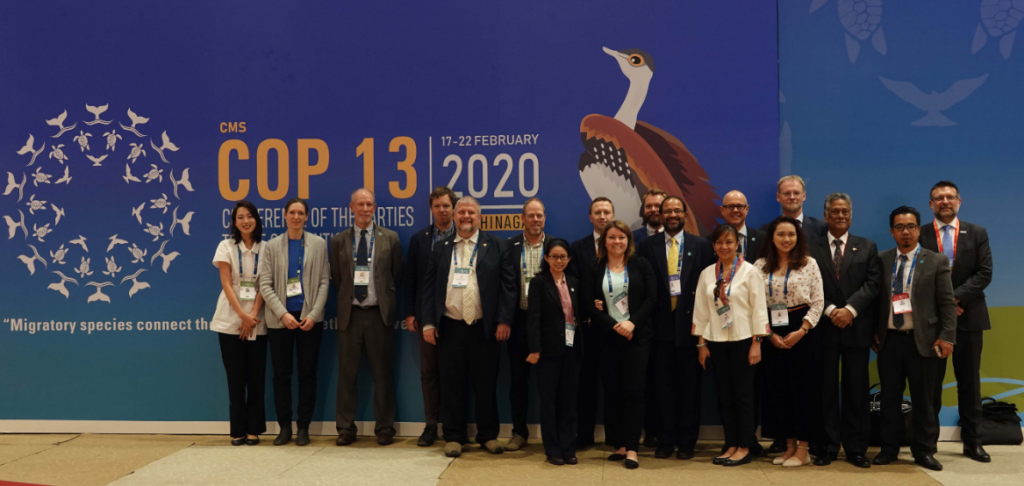
• India hosted the 13th CMS COP for the first time in 2020 at Gandhinagar (Gujarat).
• The theme of the COP13 was, “Migratory species connect the planet, and together we welcome them home!”
• India contains a significant bird flyway network, like the Central Asian Flyway.